- 1
Bulguksa Temple
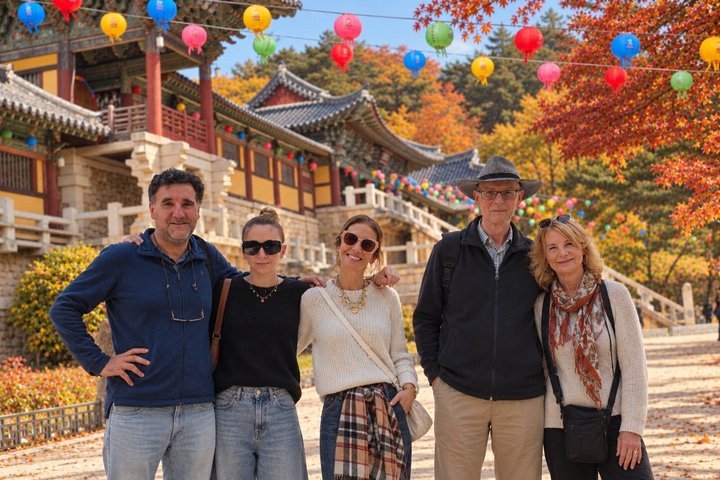
Bulguksa Temple, a UNESCO World Heritage site in Gyeongju, is a masterpiece of Silla-era Buddhist architecture.
Constructed in the 8th century, it showcases magnificent stone pagodas, detailed wooden halls, and a serene atmosphere reflecting Korea's spiritual heritage.
Explore the temple's rich history, admire national treasures like the Dabotap and Seokgatap pagodas, and immerse yourself in the tranquility of this sacred cultural landmark.
· 1 h
- 2
Seokguram
Seokguram Grotto, another UNESCO World Heritage site located near Bulguksa Temple, is an exquisite example of 8th-century Buddhist art.
Nestled within the mountains, the grotto features a tranquil granite Buddha statue surrounded by intricate carvings of bodhisattvas and guardians.
This sacred site embodies the spiritual and artistic achievements of the Silla dynasty, offering a peaceful and inspiring cultural encounter.
· 40 min
- 3
Daereungwon Tomb Complex
Daereungwon is a royal tomb complex in Gyeongju, housing ancient burial mounds from the Silla dynasty.
Cheonmachong, also known as the "Heavenly Horse Tomb," is notable for its excavated artifacts and murals, providing a unique insight into Silla royal life.
Visitors can enter the tomb to view treasures like a golden crown and learn about Korea's rich history within this peaceful, park-like setting amidst grassy mounds.
· 40 min· Admission not included
- 4
Gyeongju National Museum
The Gyeongju National Museum displays over 100,000 artifacts from the Silla Kingdom (57 BC–935 AD).
Highlights include the renowned 20t Bell and golden crowns recovered from royal tombs.
Permanent exhibitions cover Silla history, Buddhist art, and treasures discovered at Anapji Pond.
· 40 min
- 5
Cheomseongdae Observatory
Built during Queen Seondeok's reign (632–647 CE), Cheomseongdae Observatory is the oldest surviving astronomical observatory in Asia.
This cylindrical stone tower, standing 9.17 meters high, is composed of 365 granite blocks, representing the days of the year.
Strategically placed windows and openings enabled ancient astronomers to observe celestial events, assisting with agricultural and political planning.
· Non-stop passage
- 6
Gyeongju Gyochon Traditional Village
Gyochon Village offers a glimpse into Korea's rich cultural heritage.
It is the ancestral home of the Gyeongju Choi Clan, celebrated for their 12-generation lineage.
The village features the historic House of the Gyeongju Choi Clan, designated as an Important Folklore Material, where you can explore traditional hanok houses.
· 40 min
- 7
Woljeonggyo Bridge
Woljeonggyo Bridge is a reconstructed wooden bridge, originally built in 760 AD during the Unified Silla period.
After being destroyed during the Joseon dynasty, it was meticulously rebuilt between 2008 and 2018, becoming Korea's largest wooden bridge.
Spanning 66.15 meters, the bridge incorporates traditional Korean architectural styles and is beautifully illuminated at night, offering a picturesque setting for photography and leisurely strolls.
· 20 min
 Top pick