- 1
Meteora
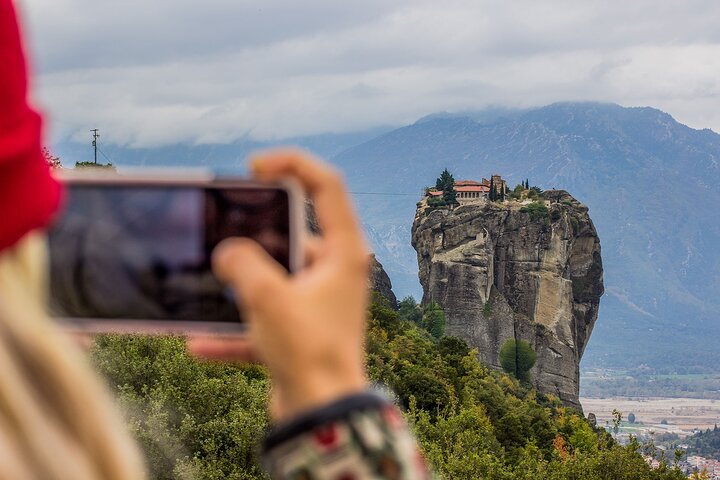
Meteora is a region spanning a few square kilometers, where an ancient monastic community and a remarkable geological phenomenon of massive rock pillars coexist harmoniously. Situated at the northwestern edge of the Thessaly plain, Meteora has become a premier destination in mainland Greece. It is recognized as a UNESCO World Heritage Site, an archaeological zone, and an officially designated sacred area! At the base of the rocks lie two settlements: the town of Kalabaka and the village of Kastraki.
· Non-stop passage
- 2
Meteora
Hike through the awe-inspiring 'rock forest' of Meteora, discover the most impressive monasteries, and capture breathtaking views on this morning excursion. The Meteora Hiking Tour offers an exceptional way to appreciate this unique geological wonder and delve into the history of a UNESCO World Heritage Site. By joining this morning hike, you will traverse hidden paths known only to locals. Let us guide you on a journey back in time, following in the footsteps of the earliest monks who settled here over 15 centuries ago. Participate in this incredible guided hiking tour and walk amongst the colossal rock pillars of Meteora for truly unforgettable vistas.
· 2 h· Admission not included
- 3
Great Meteoron Monastery
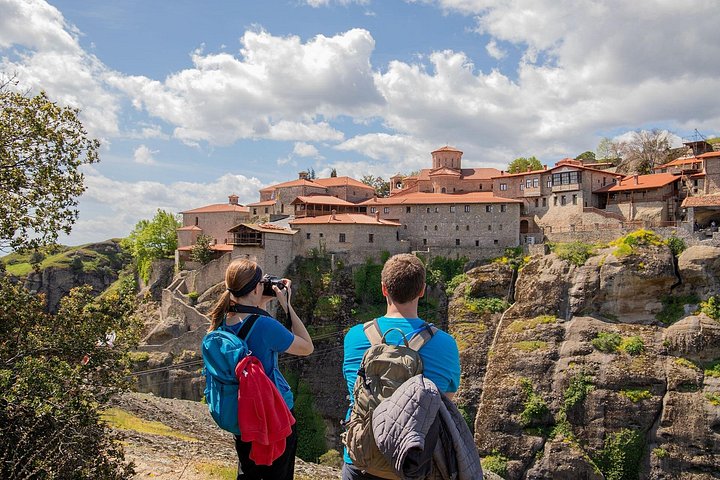
The Great Meteoron Monastery stands as the largest and oldest among all the monasteries. It earned the name 'monastery suspended in the air' (meteoro) due to the immense rock formation upon which it is constructed.
The Great Meteoron Monastery was established by Saint Athanasios the Meteorite, who was also the founder and organizer of the monastic community. Consequently, the establishment of this monastery is regarded as a pivotal moment, marking the commencement of organized monasticism in the Holy Meteora.
Hosios Athanasios was born around 1302 in the medieval town of New Patras, now known as Hypati. His given name was Andronikos.
· 1 h· Admission not included
- 4
Ypapanti Monastery
Completely built within a large rock cavity, this monastery is a distinctive example of its kind, differing from those typically found perched on rocky peaks.
A monk named Nilos, along with another monk named Cyprianus, founded and took ownership of the monastery in 1367 AD. The monastery was later destroyed in 1809 when the local hero and rebel Papathymios Vlahavas was apprehended here by the Turkish forces of Ali Pasha.
The path leading to this monastery is straightforward and pleasant.
· 30 min
- 5
Varlaam Monastery
The Holy Monastery of Varlaam is the second largest monastery, situated opposite the Great Meteoro Monastery. It was founded in the mid-14th century by the ascetic Hosios Varlaam.
The elegant Catholicon of the monastery was constructed in honor of Agioi Pantes between 1541 and 1542 by two brothers from Ioannina, the priest-monks Hosioi Theophanes and Nectarios the Apsarades. The main church was adorned with frescoes in 1548. Based on stylistic analysis, these magnificent wall paintings are attributed to the renowned hagiographer from Thebes, Frago Catelano.
· Non-stop passage
- 6
Agios Nikolaos Anapaphsas
The Holy Monastery of Saint Nicholas of Anapafsas is the first monastery encountered on the route to the Holy Meteora, established at the close of the 14th century.
Several interpretations exist for the name Anapafsas. The two most prevalent theories suggest that the name was given by one of the monastery's benefactors, or that it relates to the monastery's location as the initial stop for pilgrims and visitors, likely serving as a resting point before continuing their journey.
· Non-stop passage
 Top pick
 Top pick
 Top pick