- 1
Magere Brug
Passage without stopping.
The romantic and iconic wooden bridge of Amsterdam.
· Non-stop passage
- 2
Amsterdam Canal Ring
Passage without stopping.
Amsterdam, the capital of the Netherlands, features over one hundred kilometers of canals (grachten), approximately 90 islands, and 1,500 bridges. The three main canals—Herengracht, Prinsengracht, and Keizersgracht—were dug in the 17th century during the Dutch Golden Age, forming concentric belts around the city known as the Grachtengordel. Alongside these main canals are 1,550 monumental buildings. The 17th-century canal ring area, including Prinsengracht, Keizersgracht, Herengracht, and Jordaan, was designated a UNESCO World Heritage Site in 2010, contributing to Amsterdam's reputation as the "Venice of the North."
· Non-stop passage
- 3
Rijksmuseum
Passage without stopping.
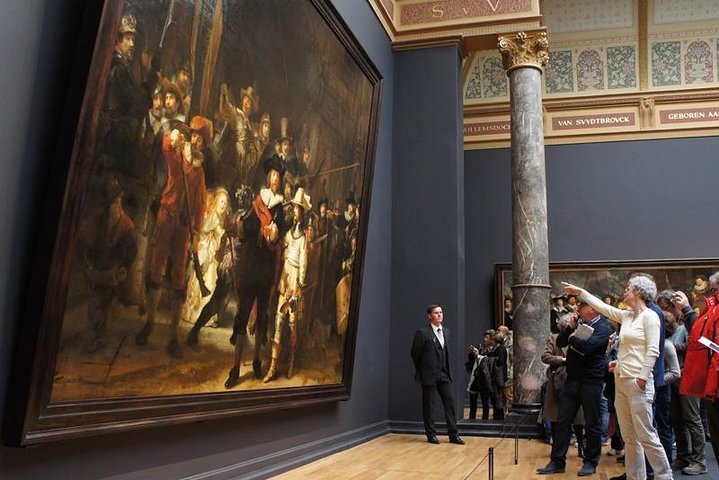
We dock directly in front of the Rijksmuseum. Take a moment to admire this magnificent museum, both for its architecture and its amazing exhibitions, including Rembrandt's world-famous masterpiece, 'The Night Watch'.
· Non-stop passage
- 4
The Jordaan
Passage without stopping.
The most widely accepted theory for the origin of the name 'Jordaan' is its derivation from the French word 'Jardin,' meaning garden, as most streets and canals in the area are named after trees and flowers. Another theory suggests that the Prinsengracht canal was once nicknamed 'Jordaan' (the Dutch name for the River Jordan), and the neighborhood beyond the canal adopted this name as well. Our flagship canal tour begins and ends here in the Jordaan.
· Non-stop passage
- 5
Prinsengracht
Passage without stopping.
One of Amsterdam's three main canals, named after the three princes of Holland. Construction began in 1612 under the initiative of Mayor Frans Hendricksz. Oetgens, based on a design by city carpenter Hendrick Jacobsz Staets and city surveyor Lucas Jansz Sinck. The section between Leidsegracht and the Amstel was developed during the city's expansion in 1658. The eastern section was constructed during the last expansion and was named Nieuwe Prinsengracht. The Korte Prinsengracht extends Prinsengracht between Brouwersgracht and Westerdok.
· Non-stop passage
- 6
Houseboat Museum
Passage without stopping.
Our boats will cruise past the Houseboat Museum on Prinsengracht, offering a unique glimpse into how Amsterdammers live on their houseboats. It's an affordable and particularly fun experience for children.
· Non-stop passage
- 7
Leiden Square (Leidseplein)
Passage without stopping.
One of Amsterdam's two main entertainment hubs, featuring numerous bars, restaurants, and nightclubs. It's the perfect spot for those seeking music and drinks.
· Non-stop passage
- 8
Spiegelkwartier
Passage without stopping.
The impressive Rijksmuseum is visible from Spiegelgracht, a canal connecting Prinsengracht with Lijnbaansgracht and leading to Nieuwe Spiegelstraat. Spiegelkwartier is known for its many galleries and antique shops. Art enthusiasts can stroll from Museumplein along Spiegelgracht, enjoying exquisite paintings, antiques, and art objects.
· Non-stop passage
- 9
De Duif
Passage without stopping.
The current church is named after a predecessor, the 17th-century hidden church 'Het Vrededuifje' which once stood on Kerkstraat. The foundation stone for the present Duifkerk, designed by Leiden architect Th. Molkenboer, was laid in April 1857. Due to financial constraints, the church fell into disrepair throughout the 20th century. For over twenty-five years, the building was closed as its monumental facade had become detached. This danger has since been averted. De Duif reopened in 2002 after extensive restoration, during which the original murals were revealed beneath layers of paint.
· Non-stop passage
- 10
The Amstel
Passage without stopping.
The Amstel is the widest canal, and Amsterdam originated from this waterway, which was once a river. Fishermen built a "dam" here, giving the city its name. Amstel is also the name of the famous beer.
· Non-stop passage
- 11
Westerkerk
Passage without stopping.
The Westerkerk (Western Church) is a Dutch Protestant church located in central Amsterdam, Netherlands. It is situated in the western part of the Grachtengordel neighborhood (Centrum borough), adjacent to the Jordaan, between Prinsengracht and Keizersgracht.
· Non-stop passage
- 12
Koninklijk Theater Carre
Passage without stopping.
The Royal Theatre Carré (Koninklijk Theater Carré) is a Neo-Renaissance theatre in Amsterdam, located near the Amstel river. Founded in 1887, it was initially intended as a permanent circus building. Today, it primarily hosts musicals, cabaret performances, and pop concerts.
· Non-stop passage
- 13
H'ART Museum
Passage without stopping.
Hermitage Amsterdam is a branch museum of the Hermitage Museum in Saint Petersburg, Russia, situated on the banks of the Amstel river in Amsterdam. The museum is housed in the former Amstelhof, a classical-style building dating back to 1681.
· Non-stop passage
- 14
Blauwbrug
Passage without stopping.
The Blauwbrug (Blue Bridge) is a historic bridge in Amsterdam, Netherlands, spanning the Amstel river. It connects the Rembrandtplein area with the Waterlooplein area and is located south of the Stopera.
· Non-stop passage
- 15
Dutch National Opera & Ballet
Passage without stopping.
The Dutch National Opera (DNO; formerly De Nederlandse Opera, now De Nationale Opera in Dutch) is an opera company based in Amsterdam, Netherlands. Its current home is the Dutch National Opera & Ballet, housed in the Stopera building, a modern structure designed by Cees Dam and Wilhelm Holzbauer, which opened in 1986.
· Non-stop passage
- 16
South Church
Passage without stopping.
The Zuiderkerk is the first church designed for Protestant worship in Amsterdam. It was built near Sint Antoniesbreestraat in the Last, a neighborhood added to the city at the end of the 16th century, now known as the Nieuwmarkt neighborhood. The church is located at Zandstraat no. 17.
· Non-stop passage
- 17
Amsterdam Light Festival
Passage without stopping.
Amsterdam's winter festival returns annually, illuminating the city's streets and waterways with enchanting light installations by international artists.
· Non-stop passage
- 18
Nieuwmarkt
Passage without stopping.
One of Amsterdam's oldest markets, this vibrant location combines the Chinese quarter with the red-light district. Don't miss the beautiful Waag, which now houses a restaurant but was once the western entrance to the old city, where witches and criminals were historically hanged.
· Non-stop passage
- 19
Amsterdam Cheese Museum
Passage without stopping.
Prepare for the #1 Cheese Experience in Amsterdam: the Amsterdam Cheese Museum. Beyond offering free cheese tastings, you can explore the history of cheesemaking and savor the unique flavors of Holland's finest cheeses. Learn about Dutch cheese, see the world's most expensive cheese slicer, and have fun dressing up as a traditional Dutch cheese farmer.
· Non-stop passage
- 20
Emperor's Canal (Keizersgracht)
Passage without stopping.
The three main canals (Herengracht, Prinsengracht, and Keizersgracht), established in the 17th century during the Dutch Golden Age, form concentric belts around the city, known as the Grachtengordel. The area boasts 1,550 monumental buildings along these main canals. The 17th-century canal ring area, including Prinsengracht, Keizersgracht, Herengracht, and Jordaan, was recognized as a UNESCO World Heritage Site in 2010, contributing to Amsterdam's moniker as the "Venice of the North."
· Non-stop passage
- 21
Herengracht
Passage without stopping.
The three principal canals (Herengracht, Prinsengracht, and Keizersgracht), constructed in the 17th century during the Dutch Golden Age, encircle the city in concentric belts known as the Grachtengordel. These main canals are lined with 1,550 monumental buildings. The 17th-century canal ring area, encompassing Prinsengracht, Keizersgracht, Herengracht, and Jordaan, was inscribed as a UNESCO World Heritage Site in 2010, reinforcing Amsterdam's fame as the "Venice of the North."
· Non-stop passage
- 22
Singel
Passage without stopping.
The Singel is a canal in Amsterdam that encircled the city during the Middle Ages. It served as a defensive moat until 1585 when Amsterdam expanded beyond its limits. The canal flows from the IJ bay, near Central Station, to Muntplein square, where it meets the Amstel river. It now forms the innermost ring of Amsterdam's semicircular canal system.
· Non-stop passage
- 23
Statue of Anne Frank
Passage without stopping.
Anne Frank is one of Amsterdam's most recognized historical figures. Anne and her family concealed themselves from the Nazis for over two years in a house on Prinsengracht. Anne was eventually deported to the Bergen-Belsen concentration camp in 1945, where she tragically died at the age of 15. Today, Anne's legacy endures through her diary and the countless visitors who come to Amsterdam annually to learn about her brief life.
· Non-stop passage
- 24
Magere Brug
Passage without stopping.
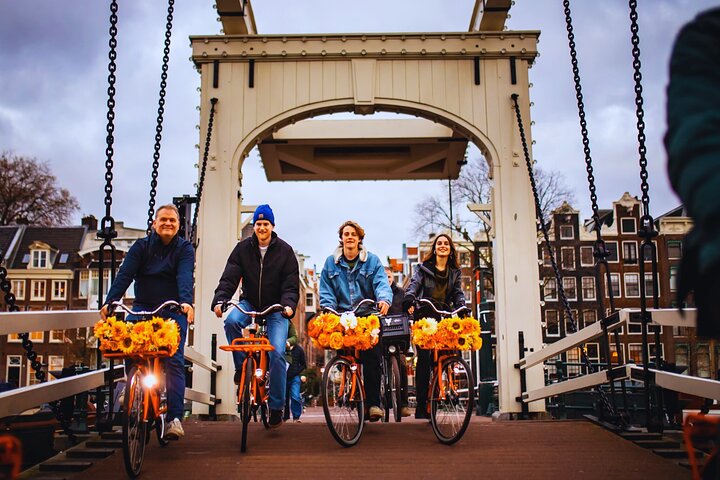
One of Amsterdam's many picturesque bridges is the Magere Brug, known in English as the Skinny Bridge. This wooden drawbridge was once so narrow that it was difficult for two pedestrians to pass each other. A wider bridge replaced the original in 1871 to accommodate increased traffic on the Amstel. Also known as a 'love bridge,' a kiss on top or underneath is said to ensure eternal love!
· Non-stop passage
- 25
Munt Tower (Munttoren)
Passage without stopping.
The Munttoren (Mint Tower) was once part of the Regulierspoort, which included a gate flanked by two towers. Constructed between 1480 and 1487 as part of the medieval city wall, the tower was used for minting coins in the 17th century.
· Non-stop passage
- 26
Bloemengracht and Bloemenmarkt
Passage without stopping.
The Bloemengracht and Bloemenmarkt (Flower Market) are famous for their numerous stalls selling Dutch tulips, bulbs, and a wide array of typical Dutch souvenirs.
· Non-stop passage
- 27
Elegant Hotel
Passage without stopping.
This elegant hotel, featuring a seventeenth-century facade, overlooks the Keizersgracht canal. It is located one kilometer from the Rijksmuseum and two kilometers from the s105.
· Non-stop passage
- 28
Luxurious Modern Hotel
Passage without stopping.
This luxurious, modern hotel on Prinsengracht is two kilometers from the Anne Frank House and the Van Gogh Museum. Dam Square is one kilometer away.
· Non-stop passage
- 29
Museum of the Canals
Passage without stopping.
For centuries, this area has been a hub for commerce, artistic creation, celebrations, and enjoyment of life. The Museum of the Canals brings this rich history to life.
· Non-stop passage
- 30
Melkweg
Passage without stopping.
The Melkweg is a popular music venue and cultural center offering live music, club nights, photography exhibitions, film screenings, and festivals. It is housed in a former sugar refinery and milk factory on Lijnbaansgracht in Amsterdam, located behind Leidseplein and next to the Stadsschouwburg.
· Non-stop passage
- 31
DeLaMar Theater
Passage without stopping.
The DeLaMar Theater is a complex with two halls, seating 601 and 949 spectators, located at Marnixstraat 402, near Leidseplein in Amsterdam. Recently renovated, it is one of the most renowned theaters in the Netherlands, having hosted performances by many famous Dutch theater artists.
· Non-stop passage
- 32
Amstelveld
Passage without stopping.
Amstelveld is a square in central Amsterdam, situated between Reguliersgracht, Prinsengracht, and Kerkstraat, near Utrechtsestraat. The Amstelkerk, a predominantly wooden structure, stands on the square, surrounded by a characteristic plantation of 46 Caucasian wingnut trees.
· Non-stop passage
- 33
Jewish Historical Museum
Passage without stopping.
The Jewish Historical Museum in Amsterdam showcases Jewish culture, religion, and history. Since 1987, it has been located on Jonas Daniël Meijerplein in the heart of the old Jewish Quarter. It serves as a valuable alternative for those interested in Jewish heritage, similar to the Anne Frank House.
· Non-stop passage
- 34
Amsterdam Icebar
Passage without stopping.
The Amsterdam Icebar is one of the city's coolest attractions (literally) and ranks among the top 10 things to do in Amsterdam. This unique bar maintains a constant temperature of -10°C, with everything, including the bar itself, constructed entirely of ice. Experience this remarkable venue while enjoying your favorite drinks.
· Non-stop passage
- 35
De Kleine Komedie
Passage without stopping.
De Kleine Komedie is a theater located on the Amstel river in Amsterdam, built in 1786. It is the oldest theater in the city and can accommodate 503 spectators. Since the 1980s, this theater, focusing on intimate performances, has become known as the 'cabaret temple of the Netherlands'.
· Non-stop passage
- 36
De Stadsschouwburg
Passage without stopping.
The Stadsschouwburg (Municipal Theatre) of Amsterdam is a theatre building located at Leidseplein in Amsterdam, Netherlands. Built in the neo-Renaissance style in 1894, it was formerly the home of the National Ballet and Opera.
· Non-stop passage
- 37
Paradiso
Passage without stopping.
Originally a church, this venue was transformed into a concert hall during the flower power era. It has hosted performances by legendary artists such as Bruce Springsteen, The Beatles, and The Rolling Stones.
· Non-stop passage
- 38
Museumplein
Passage without stopping.
Museumplein is a public square and city park located in the Amsterdam-Zuid district, just south of Amsterdam-Center. It derives its name from the Rijksmuseum, which opened in 1885 and is situated on the square. The Stedelijk Museum, Van Gogh Museum, Moco Museum, and Concertgebouw are also located on Museumplein.
· Non-stop passage
- 39
Mozes en Aaronkerk
Passage without stopping.
The Moses and Aaron Church, officially dedicated to St. Anthony of Padua, is a Roman Catholic church located on Waterlooplein in Amsterdam, within the Dutch province of North Holland.
· Non-stop passage
- 40
Cromhout House
Passage without stopping.
The Bijbels Museum is located on Herengracht in Amsterdam. Its mission is to provide insight into the historical and contemporary role of the Bible in society and culture, and to explore with visitors the stories and sentiments that shape our society and culture, both within the museum and beyond.
· Non-stop passage
- 41
Huis Marseille
Passage without stopping.
Huis Marseille Museum for Photography is situated on Keizersgracht in Amsterdam, housed in a monumental canal house built in 1665. It was the first museum in the Netherlands dedicated exclusively to photography as an art form. New exhibitions are presented every three months since 1999.
· Non-stop passage
- 42
Amsterdam Museum
Passage without stopping.
The Amsterdam Museum, formerly known as the Amsterdams Historisch Museum until 2011, is a museum in Amsterdam dedicated to the city's past and present.
· Non-stop passage
- 43
Nieuwe Kerk
Passage without stopping.
De Nieuwe Kerk is a church building in Amsterdam, located at Dam Square 12, adjacent to the Palace on Dam Square. Mozes and Aäronstraat runs between the church and the Palace.
· Non-stop passage
- 44
Hortus Botanicus
Passage without stopping.
The Hortus Botanicus Amsterdam is a botanical garden located on Plantage Middenlaan in the Plantage neighborhood. The garden covers approximately 1.2 hectares and features over six thousand tropical and native trees and plants.
· Non-stop passage
- 45
Museum Van Loon
Passage without stopping.
Museum Van Loon is a museum housed in a patrician's residence at Keizersgracht 672 in Amsterdam, owned by members of the Van Loon family since 1884. The canal house, built in 1672, originally served as the home of artist Ferdinand Bol. The Van Loons resided there from 1884 to 1945. Thora van Loon-Egidius, who lived in the house, was a lady-in-waiting to Queen Wilhelmina of the Netherlands.
· Non-stop passage
- 46
Foam Museum
Passage without stopping.
Foam is a photography museum on Keizersgracht in Amsterdam. The museum hosts rotating exhibitions showcasing diverse photographic genres, including historical photos, art photography, news photography, and fashion photography.
· Non-stop passage
- 47
The Cat Cabinet
Passage without stopping.
The Cat Cabinet is an art museum in Amsterdam entirely dedicated to cats. Its collection features paintings, drawings, sculptures, and other artworks depicting cats, including pieces by Picasso, Rembrandt, Toulouse-Lautrec, Corneille, Sal Meijer, Théophile Steinlen, and Jože Cha.
· Non-stop passage
- 48
Museum Willet-Holthuysen
Passage without stopping.
The Willet-Holthuysen Museum at Herengracht 605 in Amsterdam is a canal house open to the public, featuring fully furnished period rooms. It offers a glimpse into life within a grand Amsterdam canal house during the 18th and 19th centuries. The museum is managed by the Amsterdam Museum.
· Non-stop passage
- 49
The Waag
Passage without stopping.
De Waag is a 15th-century building located on Nieuwmarkt in central Amsterdam. Originally a city gate, its later function as a weighing house gave it its current name. The building has served various purposes throughout history, including as a guild house, museum, fire station, and anatomical theater.
· Non-stop passage
- 50
Gay Monument
Passage without stopping.
The Homomonument is a memorial situated on Westermarkt, between Westerkerk and Keizersgracht in central Amsterdam. Unveiled on September 5, 1987, it comprises three pink granite triangles arranged to form a larger triangle.
· Non-stop passage
- 51
Het Kleinste Huis van Amsterdam
Passage without stopping.
The smallest house in Amsterdam is located at Oude Hoogstraat 22 in the city's historic center, next to the Oost-Indisch Huis and the gateway to the Walloon Church. This house, sometimes referred to as the "Smallest House of Europe," measures 2.02 meters (6 feet 8 inches) wide and 5 meters (16 feet 5 inches) deep. With its distinctive spout gable, it represents a miniature version of a typical Amsterdam canal house. The smallest house in Amsterdam is a registered national monument.
· Non-stop passage
- 52
Hollandsche Schouwburg
Passage without stopping.
The Hollandsche Schouwburg is a Jewish monument on Plantage Middenlaan in Amsterdam. Between 1893 and 1942, it functioned as a theater. During the war years of 1942 and 1943, it served as a gathering point for Jews who were deported via Camp Westerbork to Nazi extermination camps in Germany.
· Non-stop passage
- 53
Pieter Cornelisz Hooftstraat
Passage without stopping.
Pieter Cornelisz. Hooftstraat, commonly known as P.C. Hooftstraat, is a street in Amsterdam named in 1872 after the historian, poet, and playwright Pieter Cornelisz. Hooft. Today, it is renowned for housing luxury brand stores such as Prada, Gucci, Louis Vuitton, and G-star.
· Non-stop passage
- 54
Waterlooplein Market
Passage without stopping.
Waterlooplein is the oldest flea market in the Netherlands. Established 133 years ago, it operates six days a week with approximately 300 stalls, making it one of the most appealing spots in the heart of Amsterdam. Visitors can browse for unique finds, from vintage cameras and second-hand books to jewelry and the latest fashion at affordable prices.
· Non-stop passage
 Top pick
 Free cancellation
 Top pick
 -15%
 -6%
 Top pick
 Top pick
 Top pick
 Top pick
 Top pick
 Free cancellation
 Top pick
 -20%
 -12%
 Deal
 Top pick
 -15%
 Free cancellation
 -15%
 Top pick
 Top pick
 Free cancellation
 -10%
 Top pick
 Top pick
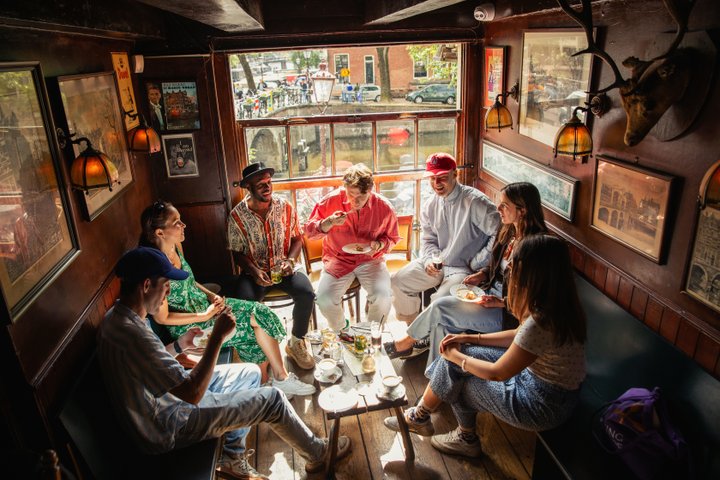 Top pick
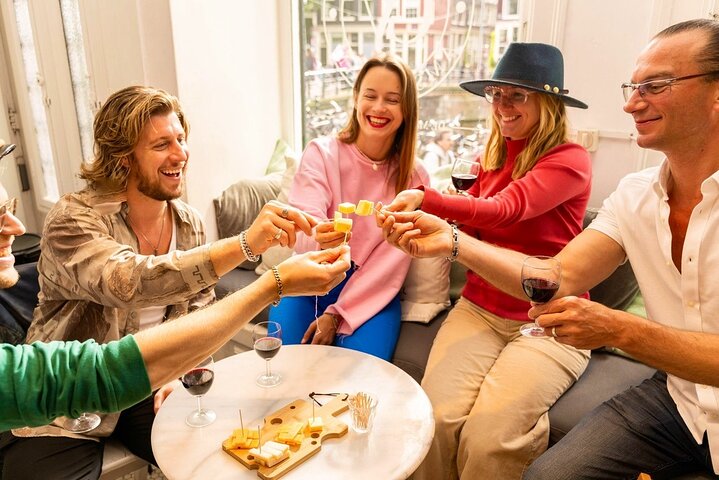 Top pick
 Top pick
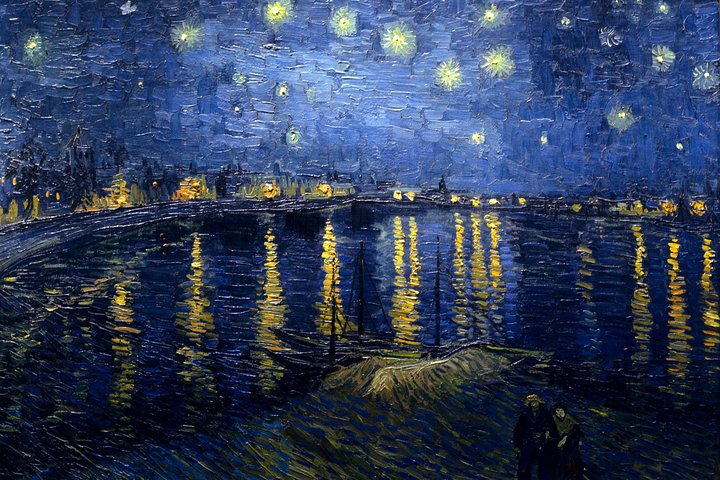
 -10%
 -8%
 Top pick
 Deal
 Top pick
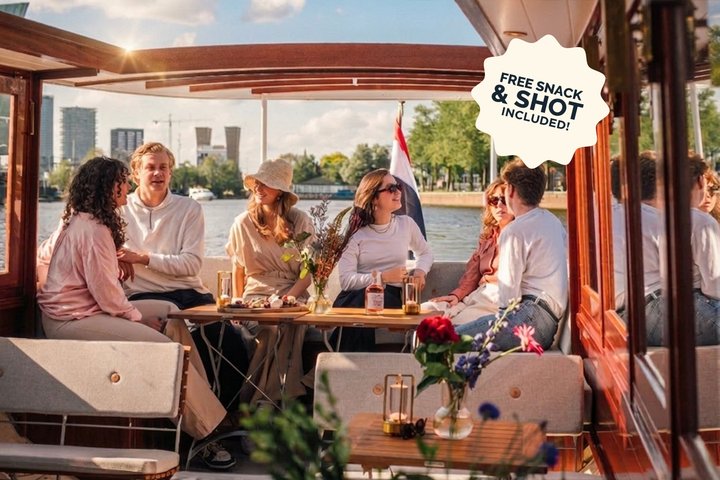 Top pick
 Guide · 8 min readAnne Frank, Zaanse Schans and Food Tours in AmsterdamFour Amsterdam activities compared: the Anne Frank guided tour, which does not enter the House, the 6.5-hour excursion to Zaanse Schans, Edam, Volendam and Marken, and two food tours. Choose by length, language and group size.
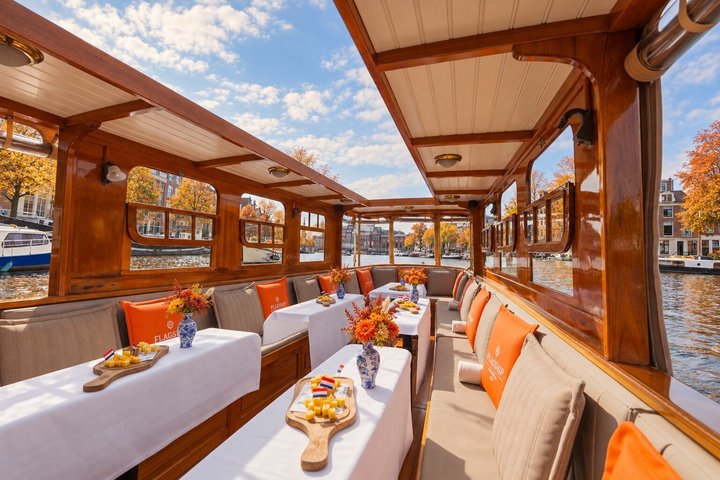 Guide · 5 min readAmsterdam canal cruise: the comparisonOne hour or ninety minutes, open boat or glass-roofed saloon, with or without unlimited drinks: five very highly rated cruises, and the details that make the difference once on board.