- 1
Bath
Bob will guide you through the heart of Georgian Bath, covering key sites such as the Abbey Church Yard, Hot Springs, Old City Wall, Mineral Hospital, Queens Square, Roman Baths, Assembly Rooms, Circus, Royal Crescent, Gravel Walk, Pulteney Bridge, Guildhall and Market, and many more.
· 2 h
- 2
Abbey Churchyard
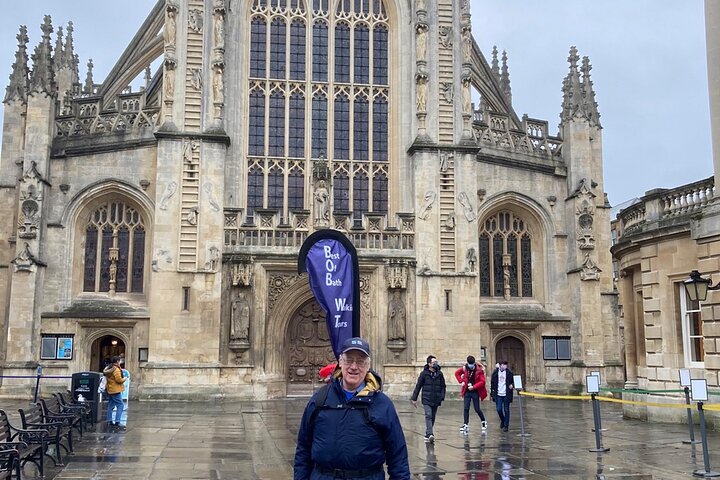
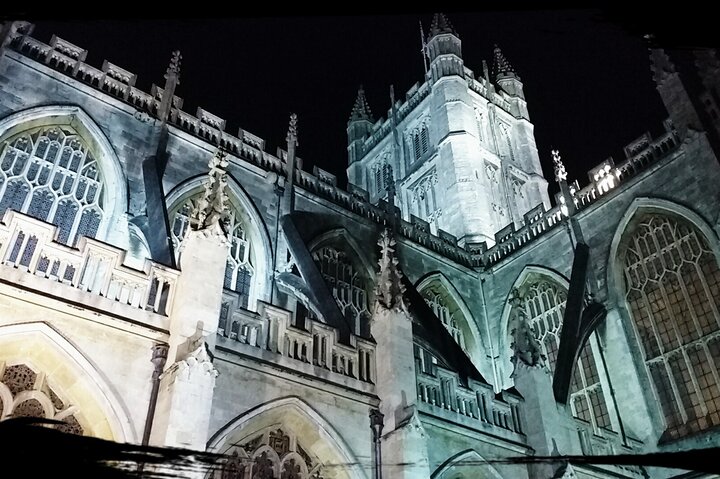
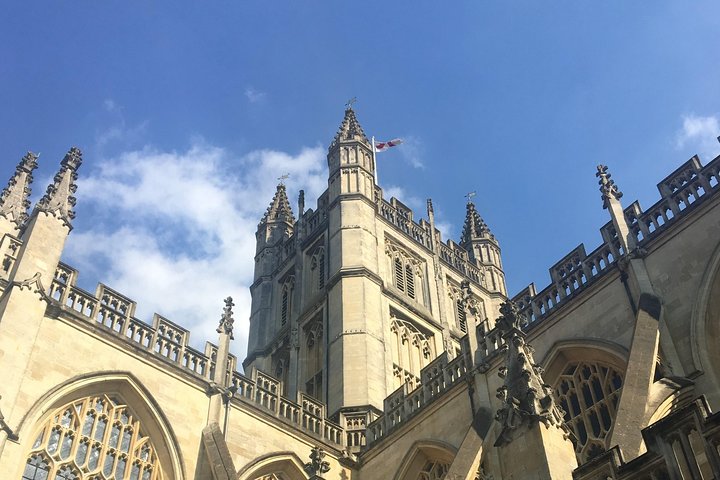
Our journey commences in the Abbey Churchyard, directly in front of the magnificent Abbey Church of Saint Peter and Saint Paul, widely recognized as Bath Abbey. This Anglican parish church boasts a rich history, originally founded as a Benedictine monastery in the 7th century, with significant reorganizations in the 10th century and rebuilding in the 12th and 16th centuries.
· 10 min
- 3
The Roman Baths
We will briefly view the remarkably preserved Roman Baths, a testament to Roman Britain. A temple was erected here between 60-70 AD. Historical records suggest the original Roman baths had fallen into disrepair by the 2nd century, with the area around the natural springs undergoing redevelopment through the Middle Ages.
· 5 min· Admission not included
- 4
Royal Mineral Water Hospital
A short stop to observe the Royal Mineral Water Hospital, whose construction began in 1737. This marked a new era of confidence in both faith and scientific understanding of the therapeutic benefits of Bath's mineral waters.
· 5 min· Admission not included
- 5
Queen Square
We'll visit Queen Square, an ensemble of Georgian houses that represents the initial phase of Bath's architectural sequence, which also includes The Circus and the Royal Crescent. All buildings within the square are designated Grade I listed structures.
· 5 min
- 6
Assembly Rooms
During Bath's fashionable Georgian period, architects John Wood the Elder and his son developed new residential areas. While early assembly rooms were built in the 18th century, a grander venue for social gatherings, concerts, and gambling was envisioned between Queen Square, The Circus, and the Royal Crescent. The new Upper Assembly Rooms opened in 1771 and quickly became a central hub for high society, attracting luminaries like Jane Austen and Charles Dickens, as well as the era's nobility.
· 5 min· Admission not included
- 7
The Circus
The Circus is a distinctive circular arrangement of grand townhouses in Bath, England, featuring three entrances. Conceived by architect John Wood the Elder, its construction between 1754 and 1768 makes it a prime example of Georgian architectural brilliance. Each section is oriented to present a classical facade directly ahead through the entrances.
· 10 min
- 8
No. 1 Royal Crescent
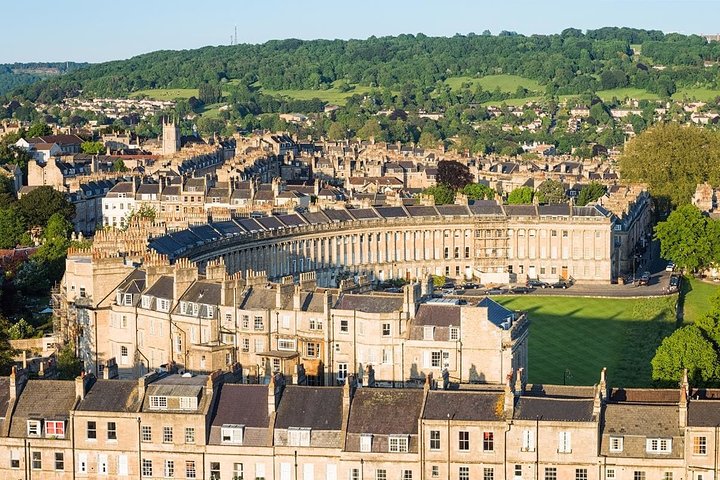
We will admire the Royal Crescent, a striking curve of 30 terraced houses in Bath, England. Also designed by John Wood the Younger and built between 1767 and 1774, it stands as one of the UK's most significant examples of Georgian architecture and is a Grade I listed building.
· 10 min· Admission not included
- 9
Pulteney Bridge
Pulteney Bridge, completed around 1774, spans the River Avon and was designed to connect the city with the Pulteney family's estate for development. Attributed to Robert Adam in a Palladian style, it is notable for its shops built across its entire length on both sides.
· 5 min
- 10
Bath Guildhall Market
We'll explore the Guildhall Market, an indoor market housed within a beautiful building, offering a variety of interesting stalls. This market has a history dating back to 1284.
· 5 min
- 11
Abbey Churchyard
The tour concludes back at the Abbey Churchyard, where you'll have ample opportunity to discuss any points of interest about Bath with your guide, Bob.
· 10 min
 Top pick
 Top pick
 Top pick
 Top pick
 Highly rated
 Top pick