- 1
Dolmabahce Palace
Passage without stopping.
Dolmabahçe Palace is an Ottoman palace located on an area of 250,000 m² in Istanbul, Beşiktaş, between Dolmabahçe Street stretching from Kabataş to Beşiktaş and the Bosphorus. It is located on the left bank at the entrance to the Bosphorus from the Sea of Marmara, opposite Uskudar and Kuzguncuk.
Dolmabahçe, which used to be a cove where ships anchored in ancient times, became the favorite residence of the sultanate, carries the memory of centuries and the clear splendor of the waters of the Bosphorus.
· Non-stop passage
- 2
Palais Çırağan
Passage without stopping.
The Çırağan Palace was commissioned by Sultan Abdülaziz and designed by the architect Sarkis Balyan. It is located in the place of a former wooden summer palace built by Selim III in 1800. In the course of the palace's construction, the wooden structure and the nearby Beşiktaş Mevlevihane were destroyed. Çırağan's construction was completed in 1871. The palace is made of marble and is spread over a total area of 80,000 square meters. After Abdülaziz was deposed, he was imprisoned here for years together with his family. After Murat V was deposed, he was also imprisoned here in a similar fashion for 29 years with his family. After the declaration of the Second Constitutional Monarchy in 1908, the palace was used as the House of Parliament, however it was damaged by fire in 1910. The palace grounds were transferred to the Beşiktaş Sports Club and were used for some time as the Şeref Stadium. Toward the beginning of the 1990s, the palace was restored and reopened as a luxury hotel.
· Non-stop passage
- 3
Ortakoy
Passage without stopping.
Ortaköy is a neighborhood and district in the district of Beşiktaş, on the European side of the Bosphorus. The Ortaköy district, which consists of Ortaköy and Mecidiye neighborhoods, is a settlement established on the slopes along the valley opening to the coast. The northern border of the district, which is surrounded by Kurucesme, Ulus, Levazım, Balmumcu and Yıldız districts, is Defterdarburnu.
The Ortaköy Bazaar is lively at all hours of the day with its "intellectual market", souvenir shops, cafes, bars and restaurants inside the bazaar. But in the early hours of the morning, the market is a bit uninspiring. The movement starts after 10:00 AM...
· Non-stop passage
- 4
Buyuk Mecidiye Camii
Passage without stopping.
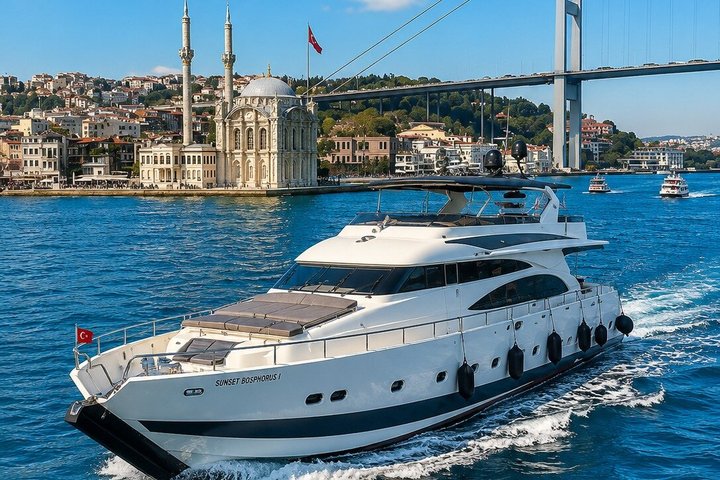
Ortaköy Mosque, officially known as the Büyük Mecidiye Mosque, is one of Istanbul’s most iconic landmarks. Located on the Bosphorus shoreline in Ortaköy, it was built in the 19th century during the Ottoman era and reflects elegant Baroque architectural style. With its waterfront setting and stunning views of the Bosphorus Bridge, the mosque is a popular symbol of Istanbul and a favorite spot for photography.
· Non-stop passage
- 5
Bosphorus Bridge
Passage without stopping.
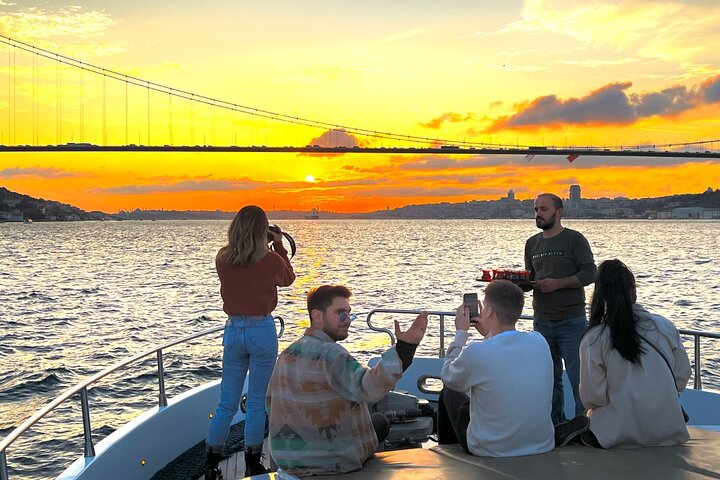
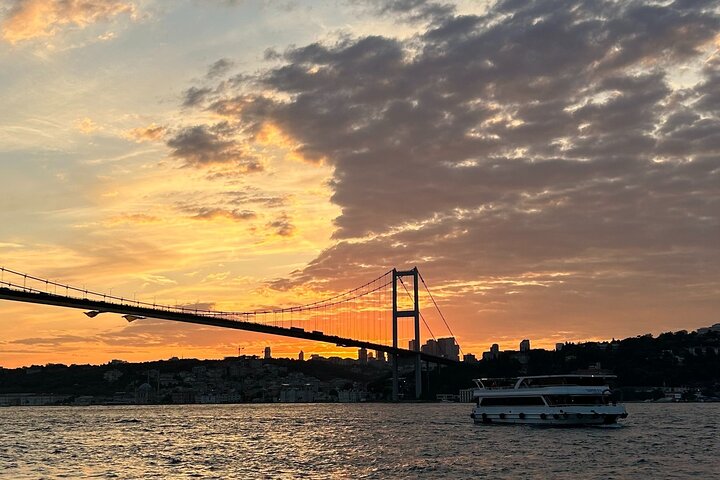
The feet of the Bosphorus Bridge, one of the two suspension bridges on the Bosphorus, are located in Ortaköy on the European side and in Beylerbeyi on the Anatolian side. The Bosphorus Bridge, the first bridge built on the Bosphorus, provides access between the two sides of the city, together with the later Fatih Sultan Mehmet Bridge and the ferries operating on the Bosphorus.
The idea of building a bridge over the Bosphorus is quite old. After many attempts, the construction of the Bosphorus Bridge started in 1970 and the bridge was opened on 29 October 1973, the 50th anniversary of the proclamation of the Republic. This suspension bridge, which is an important link in the Turkish transportation network and is very active at all hours of the day, is also an important crossing point of the Istanbul Eurasia Marathon organized by the Istanbul Metropolitan Municipality. In addition to transportation, the bridge is one of the important symbols of Istanbul with its unique Bosphorus view.
· Non-stop passage
- 6
Kuruçeşme
Passage without stopping.
Kuruçeşme is a lively and stylish neighborhood located along the European shore of the Bosphorus in Istanbul. Known for its seaside restaurants, cafés, and vibrant nightlife, it offers stunning views of the water and passing boats. With its mix of historic charm and modern social life, Kuruçeşme is a popular destination for both locals and visitors seeking entertainment by the Bosphorus.
· Non-stop passage
- 7
Galatasaray Island
Passage without stopping.
Galatasaray Island is a small private island located in the Bosphorus, near Kuruçeşme in Istanbul. Owned by Galatasaray Sports Club, it is used as a social and recreational venue for its members. The island is known for its elegant facilities, swimming pools, and beautiful Bosphorus views, making it a distinctive landmark on the waterfront.
· Non-stop passage
- 8
Arnavutköy
Passage without stopping.
Arnavutköy is a charming historic neighborhood located on the European side of Istanbul along the Bosphorus. It is famous for its colorful wooden Ottoman houses, narrow streets, and relaxed atmosphere. With its seaside cafés, fish restaurants, and scenic waterfront, Arnavutköy offers a peaceful escape and an authentic glimpse into Istanbul’s traditional lifestyle.
· Non-stop passage
- 9
Bebek Park
Passage without stopping.
Bebek is a historic Istanbul neighborhood, located on the European shores of the Bosphorus, surrounded by Arnavutköy, Etiler and Rumeli Hisarı. The direct translation of the word Bebek is baby, which is a reference to the neighborhood's attractive positioning on the Bosphorus. A popular residential district since the Ottoman rule, Bebek's population reflects the diverse society of the time. Today, with its historical buildings such as Boğaziçi University and waterside mansions, with its beautiful Bosphorus view and fancy restaurants.
· Non-stop passage
- 10
Rumeli Fortress
Passage without stopping.
Located in Sarıyer, Rumeli Fortress (Rumeli Hisarı) was constructed directly across from the Anadolu Hisarı (the Anatolian Fortress). Construction began in 1453 at the order of Sultan Mehmet the Conqueror, placing the fortress at the narrowest point of the Bosphorus. The construction was completed in the short span of three months. Before the conquest of Istanbul, it was used to protect against naval attacks. After the conquest, it was used as an inspection point for maritime traffic on the Bosphorus.
Over the centuries, the area inside the fortress filled with small wooden houses but in the course of restoration work in 1953, these houses were removed. After its restoration, the fortress came to be known for the numerous concerts given here during the summer months, and it now serves as an open-air theater and museum.
· Non-stop passage
- 11
Fatih Sultan Mehmet Bridge
Passage without stopping.
Istanbul's second bridge spanning the Bosphorus, the Fatih Sultan Mehmet Bridge (Fatih Sultan Mehmet Köprüsü) was built between Kavacık and Hisarüstü. Construction began in 1986 and the bridge opened on the 3rd of July 1988. The Fatih Sultan Mehmet Bridge is the 14th largest steel suspension bridge in the world.
Along with the Bosphorus Bridge and the city's ferries, the Fatih Sultan Mehmet Bridge carries a significant portion of Istanbul's trans-Bosphorus traffic. It has also become an unforgettable piece of the Istanbul skyline.
· Non-stop passage
- 12
Anadolu Hisari Fort
Passage without stopping.
The Anatolian Fortress (Anadolu Hisarı) is located in Beykoz (on the Asian Side), at the narrowest point of the Bosphorus. It was built in 1395 by Bayezid I and is made up of a citadel and its exterior castle walls. After the conquest of Istanbul, it lost much of its strategic importance and was converted into a military hospital. Over time, the area around the castle became settled. Today, waterfront houses and old mansions are dispersed among the castle's ruins. During restoration work which lasted from 1991-1993, it was converted into a museum however it is not open to the public. Today, Anadolu Hisarı is an open-air museum but only outer walls can be visited, and the road passes just through it.
· Non-stop passage
- 13
Kucuksu Pavilion
Passage without stopping.
The Küçük Su Palace, located on the Bosphorus coast road between Üsküdar and Beykoz, is a small Ottoman summer palace ordered by the Ottoman Sultan Abdülmecit. The palace was designed by the famous architect of the time, Nikogos Balyan. With its excellent view of the Bosphorus, Küçük Su attracted many Sultans during the Ottoman period who used the palace for relaxation. Because of the fine quality of furniture, paintings, carpets and the delicacy in details, the small palace was opened as a museum during the Republican period.
· Non-stop passage
- 14
Kuleli Military High School
Passage without stopping.
Kuleli Military High School is a historic landmark located on the Asian shore of the Bosphorus in Istanbul. Established in the 19th century, the building is known for its elegant architecture and striking waterfront location. It has played an important role in Turkish military education and remains one of the most recognizable structures along the Bosphorus.
· Non-stop passage
- 15
Beylerbeyi Palace
Passage without stopping.
The Beylerbeyi Palace (It means -Lord of Lords") is an Ottoman summer palace complex built in the 1860s on the shores of the Bosphorus. Today it lies right under the Bosphorus bridge. The building was designed by the well-known architect Sarkis Balyan and it combines elements of Renaissance, Baroque and other styles from both the East and West. The main building of the complex is a two-story construction, made of stone, on a high basement. The building was constructed on a land of about 2,500 square meters sits on a rectangular floor area. The South side of the Palace was organized as Imperial Mabeyn and The North side as Valide Sultan's Apartment. There are a total of 6 halls, 24 rooms, 1 hamam and 1 bathroom on two floors.
In addition to the fantastic view of the Bosphorus and historical architecture, one should not miss exploring its lily pond and large garden.
· Non-stop passage
- 16
Üsküdar
Passage without stopping.
Üsküdar is a historic and cultural district located on the Asian side of Istanbul, along the Bosphorus. Known for its mosques, seaside squares, and traditional neighborhoods, it offers stunning views of the Maiden’s Tower and the European shore. With its deep Ottoman heritage and calm atmosphere, Üsküdar reflects the spiritual and timeless character of Istanbul.
· Non-stop passage
- 17
KIz Kulesi
Passage without stopping.
The Maiden's Tower (Kız Kulesi) is a distinctive feature of the Bosphorus skyline. Built on a tiny island located about 200m from the shore of Üsküdar, the tower is the main subject of many legends.
The most popular legend is about a sultan and his daughter. An oracle prophesied that the sultan's daughter would be killed by a snake bite on her 18th birthday. The sultan decided to protect her from this misfortune and had the tower built in the middle of the Bosphorus, where she was put to live her life in secrecy and protection. Finally, on her 18th birthday, the sultan brought her a basket of fruits as a birthday gift, not aware of the hidden snake inside. Upon reaching into the basket, the princess was bitten by the snake and died in her father's arms as foreseen by the oracle. Referring to this legend, the tower got its name: Maiden's Tower.
· Non-stop passage
- 18
Galata Koprusu
Passage without stopping.
The history of the Galata Bridge (Galata Köprüsü), one of Istanbul's most exciting spots, begins in 1845. The bridge, which spans the two sides of the Golden Horn, has gone through many changes over the years. Most recently, the bridge was damaged by fire in 1992 and a new bridge was built in its place. The beloved old bridge was moved to Haliç. The Galata Bridge is an important symbol of Istanbul and has an important place in the daily life of the city, as well as in its literature and popular culture. With its restaurants, cafes and hookah lounges below and the tramway and pedestrian traffic passing above, it offers a splendid view of the city, particularly in the evening.
Together with the street vendors, people fishing from the bridge and the ferries docking across the way, it is one of the most magnificent places to get a picture of daily life in Istanbul.
· Non-stop passage
- 19
Galata Tower
Passage without stopping.
Built by the Genoese in 1348, the nine-story tower is 66.90 meters high, and it was the tallest building in the city when built.
In the Ottoman Era, the tower has been used for different purposes such as a fire observatory and a jail. During its long history, the tower witnessed a lot, but the most striking occasion undoubtedly was in 1632, when Hezarfen Ahmet Çelebi glided from the top of the Galata Tower across the Bosphorus to Üsküdar with his self-constructed wings. During a storm in 1875, the conic roof of the tower was destroyed and was not restored during the rest of the Ottoman Era. In the 1960s, the conical cap has been restored and the wooden interior was replaced by a concrete structure. Since then, the tower is open to the public. Today, there is a restaurant and cafe on its upper floor. With its essential role in Istanbul's skyline, Galata Tower is the optimum spot to catch a panoramic view of Istanbul.
· Non-stop passage
- 20
Galataport
Passage without stopping.
Galataport is a modern port and social hub in Istanbul's Karaköy district. It seamlessly blends the city's historical charm with contemporary architecture. The area features restaurants, cafes, shops, and cultural venues, making it a vibrant destination for both locals and tourists. The innovative underground terminal efficiently manages cruise ship traffic, adding to its appeal. Galataport is a prime example of Istanbul's fusion of culture and modernity.
· Non-stop passage
 Free cancellation
 Free cancellation
 Private tour
 Top pick
 Top pick
 Free cancellation
 Top pick
 Top pick
 Top pick
 Free cancellation
 Private tour
 Top pick
 Free cancellation
 Top pick
 Deal
 Top pick
 Top pick
 Top pick
 Top pick
 Top pick
 Top pick
 Top pick
 Free cancellation
 Top pick
 Top pick
 Top pick
 -15%
 Top pick
 Top pick
 Top pick
 Top pick
 Top pick
 Top pick
 Top pick