- 1
Medieval Walls of Rhodes
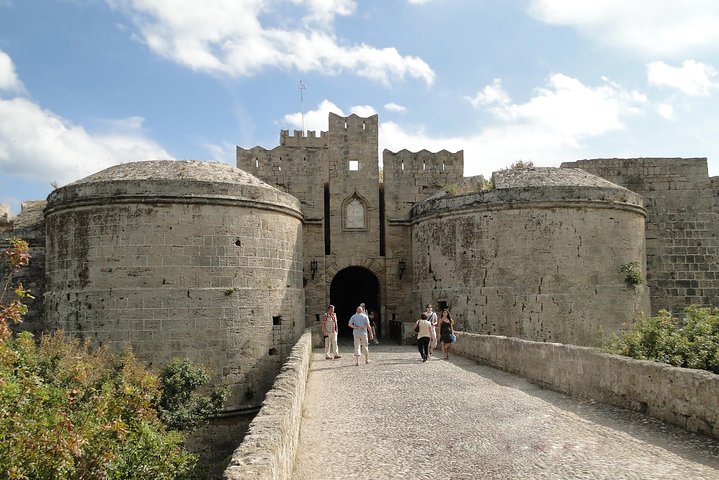
As we depart the port, cruise past the 7th-century Medieval Old Town of Rhodes. Guests can admire the fantastic sea view of the city walls and the old town, offering a great photo opportunity at this UNESCO World Heritage Site!
· Non-stop passage
- 2
Colossus of Rhodes
The Colossus of Rhodes, considered one of the Seven Wonders of the Ancient World, was a colossal statue depicting the sun god. We will pass by the location where this monument once stood at the entrance of the port!
· Non-stop passage
- 3
Kallithea Springs
Kallithea is renowned for its natural springs, and we will stop here for approximately one hour. You'll have the chance to explore and enjoy a refreshing morning swim. The springs' healing properties have been known since ancient times. Reddish water erupting from a rocky formation in the Gulf of Kallithea has attracted people for millennia. Italian architect Pietro Lombardi designed the buildings, with decorative work by fellow Italian Armando Burnaby, respecting the natural environment. Dr. Alberto Mocci organized an International Hydrological Conference here, attended by over 200 scientists. Visitors found both physical and mental cleansing in this tranquil setting. Admission from the sea is free, and you'll have ample time to explore before we sail to our second stop.
· 1 h
- 4
Faliraki Beach
On our return journey, we will pass by Faliraki Beach. This beautiful coastal town is known for its stunning beaches, crystal-clear waters, and vibrant nightlife, making it one of Rhodes' most popular tourist destinations.
· Non-stop passage
- 5
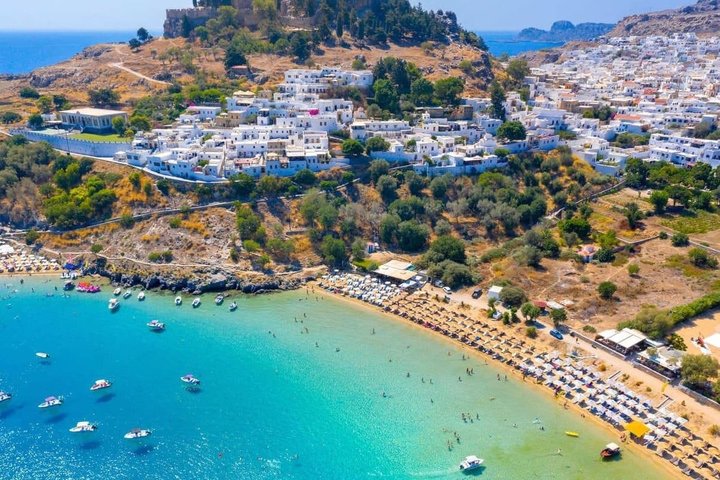
Afandou Beach
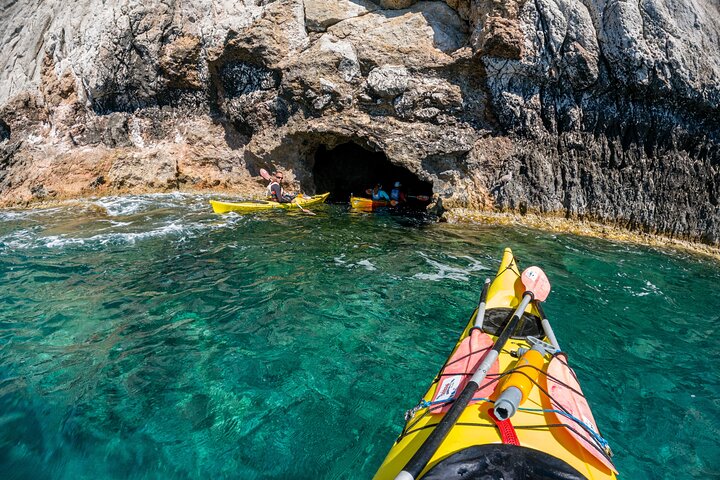
AFANTOU is famous for its vast, crystal-clear pebble beach, stretching about 6 km, and its impressive Golf Course. The pebbles from this beach were used in the construction of the sidewalks in Rhodes' Old Town. The area around Afandou holds many monuments, tombs, and temple foundations. The coastal settlement was attacked and destroyed multiple times by pirates, Persians, Arabs, and Turks. Following these attacks, inhabitants moved inland, creating the present-day settlement, invisible from the sea. The name AFANTOU derives from the Greek word 'Afando,' meaning invisible. You'll have over an hour to explore the area and its caves before we serve our lunch buffet onboard.
· 1 h
- 6
Ladiko Beach
A unique destination. The word 'Oil' in translation refers to a container for storing oil. This beautiful beach earned its name as a former commercial point for loading and unloading olive oil. For ancient cargo ships, it was a key station for transactions with regional oil producers, loading goods destined for Egypt and the Middle East. Local fishermen have discovered clay containers from shipwrecks in this area. Located just behind Anthony Quinn Bay and surrounded by caves, the picturesque Ladikos Bay is now a popular beach for boat tours and underwater activities.
· Non-stop passage
- 7
Anthony Quinn Bay
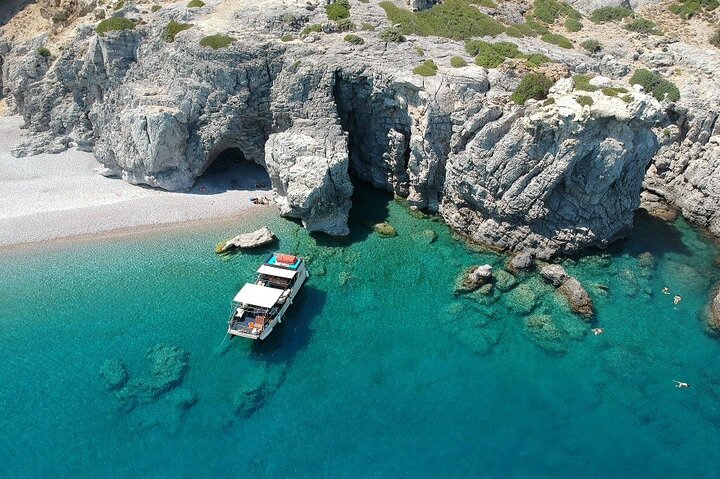
Our next stop is Anthony Quinn Bay, a small bay surrounded by high rocks with very deep water, offering a different experience than Afandou. You'll find thousands of small fish here and are invited to use the complimentary snorkeling gear available on the boat. You can also feed the fish by throwing bread nearby. The bay is named after the famous Mexican actor who starred in the 1960s blockbuster 'Cannons of Navarone.' Quinn was so captivated by the bay during filming that he asked the Greek state to buy it. Although an agreement was never finalized, the locals named the beach in his honor. Get ready for a day of adventure and beauty!
· 1 h
- 8
Mandraki Harbour
The cruise begins and ends at the beautiful Mandraki Harbour. This was the ancient 'sheep pen,' with 'mandri' meaning a small, encircling harbor in Greek. Mandraki was one of ancient Rhodes' five ports, serving as the naval harbor, known as the 'small harbor' in contrast to the 'great harbor' (present-day Commercial Harbour). Legend suggests the Colossus of Rhodes spanned the harbor entrance, though this lacks proof. Today, twin columns from the Venetian era, topped with statues of Rhodian deer, stand at the harbor's entrance. Opposite, the 15th-century Fortress of Agios Nikolaos, named after the island's patron saint, rises from a small church to an imposing bastion built by the Knights of St. John. Three remarkably preserved medieval windmills also share this scenic view.
· Non-stop passage