★★★★★Tripadvisor review
Ancient Kingdoms, Khmer Smiles & A Future Still Being Written
an-unknown-road, October 2026
Angkor by Bicycle: Ancient Kingdoms, Khmer Smiles & A Future Still Being Written
Siem Reap: Bike the Angkor Temples — Full-Day 30km Tour
Is there any better way to discover a place than to slow down, get off the beaten track and let someone who calls it home show you around?
We think not.
A short three-kilometre tuk-tuk ride from our hotel and we meet Chen, our local guide. A proud Khmer villager, a family man with two children and another little one nearly on the way, and someone with a genuine desire to share the story of his country.
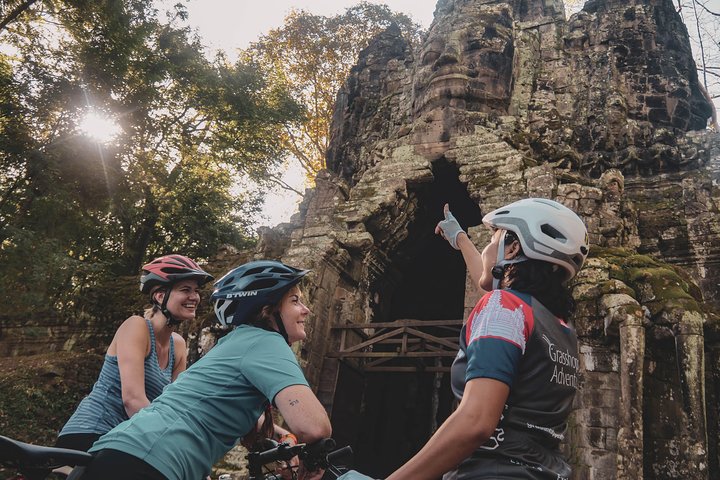
Two well-maintained mountain bikes await.
No air-conditioned bus. No convoy of minibuses. No rushing between landmarks with a camera in one hand and a checklist in the other.
Just two wheels, a local guide and a full day ahead.
Thirty kilometres on the itinerary.
Thirty-four by the time we finish.
And a whole lot more than temples along the way.
A KINGDOM WRITTEN IN STONE
We begin to pedal through the heritage landscape surrounding Siem Reap, following quiet backstreets, shaded paths and stretches of road that gradually draw us into another world.
The Khmer morning warmth is already making its presence known.
Rice fields stretch out beyond village homes. Children play beside the road. Houses hum with the sounds of everyday life. Somewhere, karaoke is doing its best to compete with the birds.
Men go about their daily work. Families gather. Scooters pass. Life carries on.
And then, almost without ceremony, the ancient world appears.
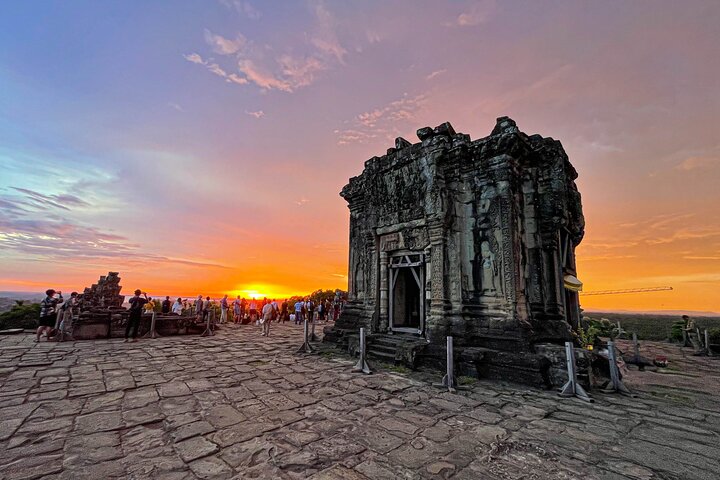
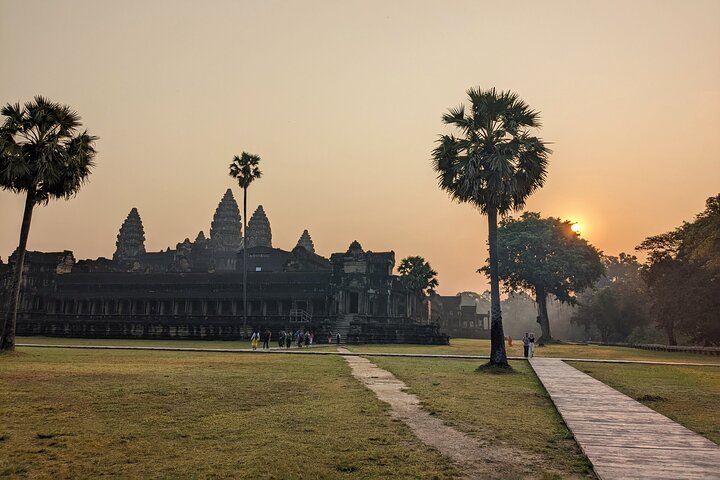
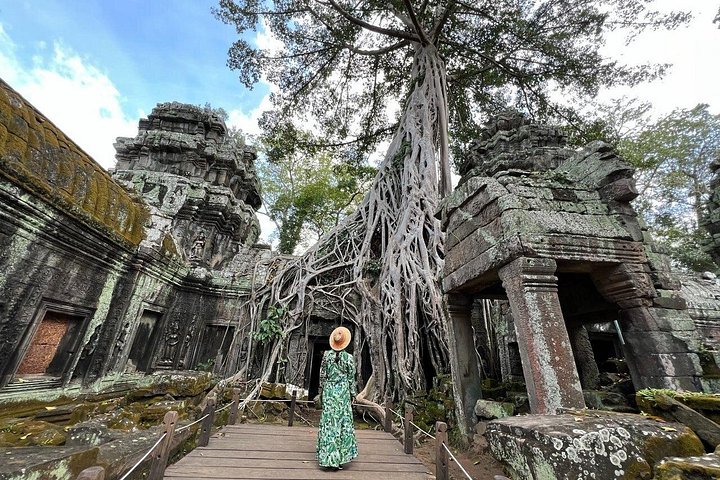
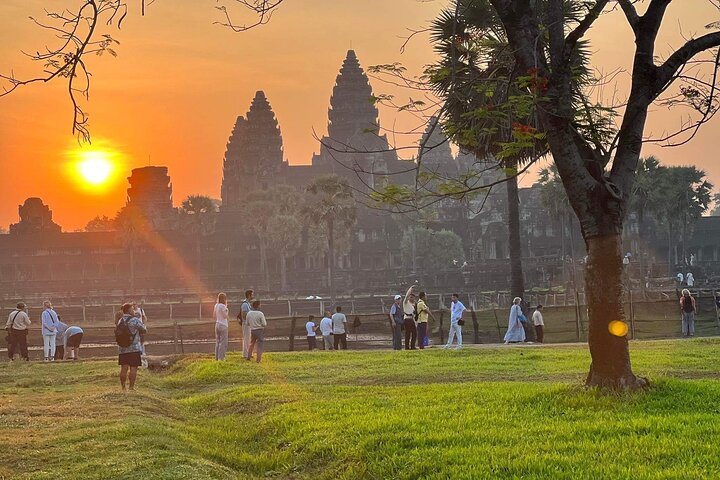
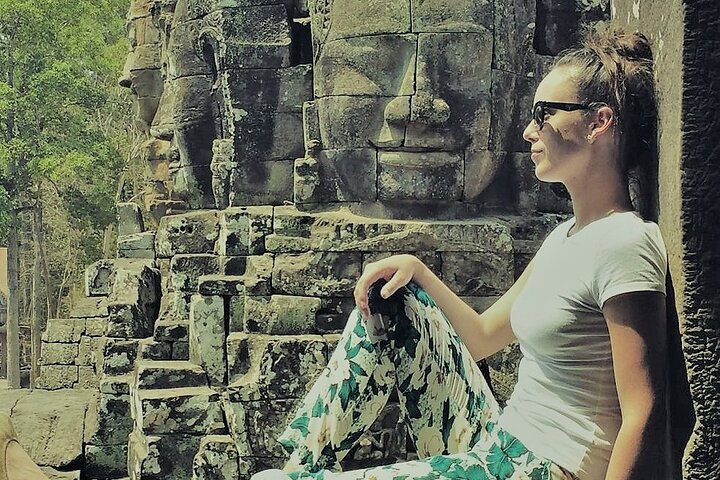
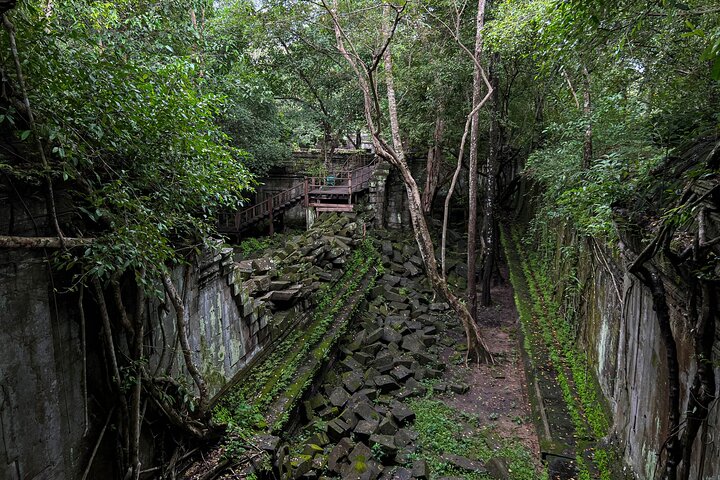
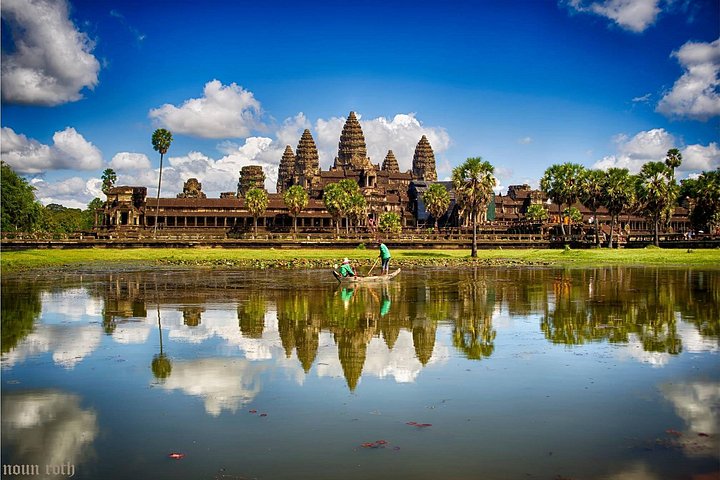
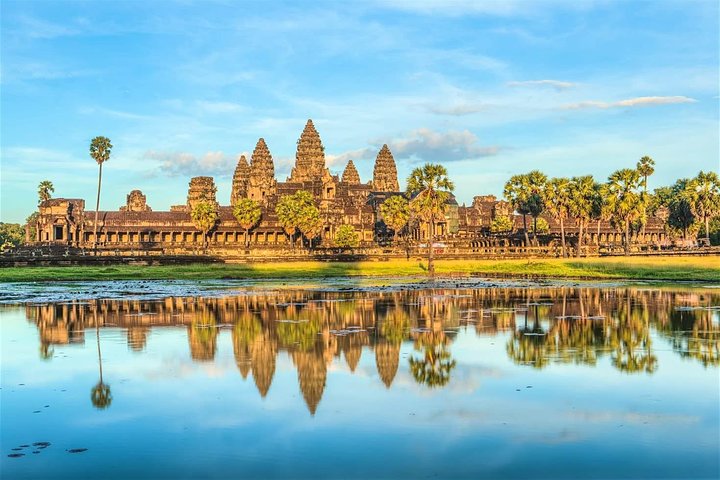
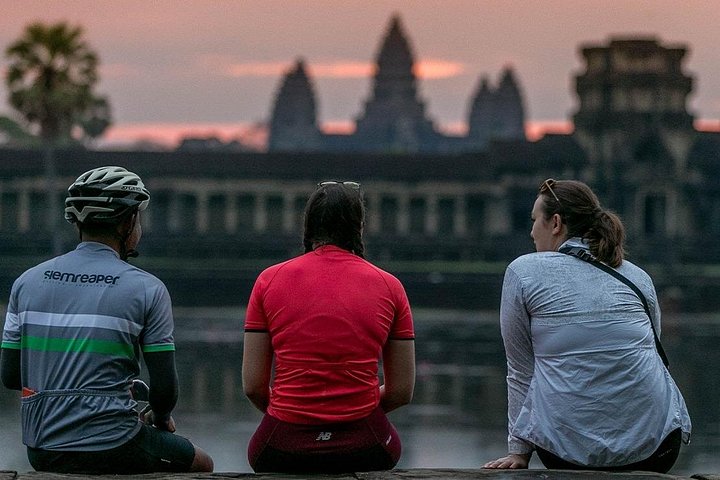
Angkor Thom. The enigmatic faces of Bayon. Ta Prohm, where the jungle has wrapped itself around the stones. Preah Khan, with its corridors and crumbling grandeur. And, of course, the extraordinary presence of Angkor Wat.
These aren’t simply ruins scattered across the Cambodian landscape.
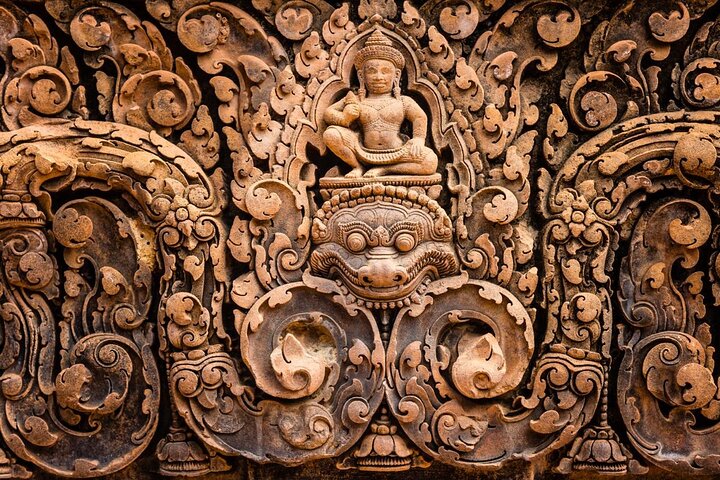
They are the remnants of an extraordinary civilisation, the legacy of the Khmer Empire and a reminder of the ingenuity, ambition and artistic brilliance of the people who built it.
You can look at the photographs. You can read the guidebooks. You can scroll through thousands of perfectly framed images online.
But none of that quite prepares you for the feeling of being there.
The scale. The detail. The silence in the spaces between the crowds.
And the thought that generations of people lived, worked, worshipped and built their world around these places long before any of us arrived with our modern conveniences and increasingly short attention spans.
Some things deserve more than a quick photograph.
They deserve your time.
A DIFFERENT KIND OF BUSY
Our visit coincides with Pchum Ben, one of Cambodia’s most significant religious festivals, a time when families honour their ancestors and many Cambodians visit pagodas and temples.
Busy?
Absolutely.
The wrong time to visit?
Not for us.
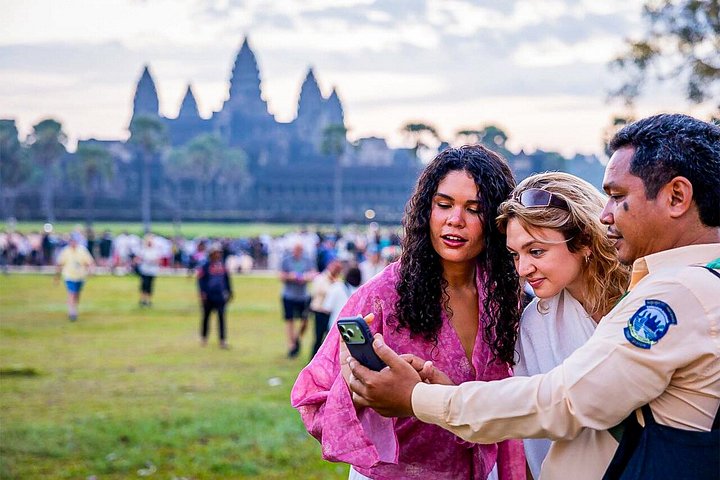
Across the temple grounds, Cambodian families arrive in traditional dress, carrying umbrellas and wearing hats against the heat. There is a sense of occasion, of reverence and of connection to something that stretches far beyond the present moment.
This isn’t a performance for visitors.
This is their country, their culture, their faith and their family traditions.
And being able to witness it is a privilege.
There are foreigners, of course, but it’s the Cambodian families who give the day its real warmth.
The smiles. The greetings. The quiet moments shared between generations.
You find yourself watching as much as sightseeing.
And perhaps that’s the point.
We often travel to see the great monuments of the world, yet the people who continue to live alongside them can tell us just as much about their meaning.
Angkor belongs in the history books.
But it also belongs to the people who still come here to pray, remember and pass their traditions on to the next generation.
Sometimes the best thing a visitor can do is simply make room, observe and appreciate.
CHEN, CAMBODIA & THE WEIGHT OF HISTORY
Throughout the day, Chen shares the story of Angkor and the wider history of Cambodia.
The rise of the Khmer Empire. The extraordinary achievements of its civilisation. The conflicts, upheavals and suffering that followed. The devastating years of the Khmer Rouge, and the long, difficult road the country has travelled since.
It is impossible to stand among these magnificent temples without thinking about the contrast between the civilisation that created them and the hardship Cambodia would endure centuries later.
The stones remain.
The country continues.
But history is never quite as distant as we sometimes imagine.
For Chen, this isn’t simply an interesting story to tell tourists. It’s the history of his home, the inheritance of his people and part of the future he hopes to help shape.
He speaks of wanting more visitors to discover Cambodia, to learn about its past and to understand more than the familiar images of Angkor Wat.
And you understand why.
Tourism can bring opportunity, employment and a better future for families like his.
Yet there’s a question that quietly follows you throughout the day.
How much more does a place need to be seen before we learn to truly see it?
Siem Reap already welcomes visitors from across Cambodia. Domestic tourism, particularly during festivals and holidays, is a reminder that these places have a living significance far beyond international travel.
The temples don’t need an influencer to tell Cambodians they matter.
They already know.
Does Angkor need more international visitors? In many ways, yes. Tourism can support local livelihoods, preserve heritage and help share Cambodia’s story with the world.
Does it need to become another backdrop for digital nomads, viral videos and people more concerned with capturing a moment than experiencing it?
I’m not so sure.
Some places deserve to remain places of reflection.
Places where you can learn, feel, listen and leave with a little more understanding than you arrived with.
Angkor is one of them.
And perhaps the challenge isn’t simply to bring more people here.
Perhaps it’s to help people understand why they came.
THE COUNTRY BETWEEN THE TEMPLES
For all the magnificence of Angkor, some of our favourite moments happen between the famous sites.
The cycling is wonderfully uncomplicated.
No gruelling climbs. No race against the clock. Just a steady rhythm through villages, rice fields and quiet pathways that reveal a different side of Siem Reap.
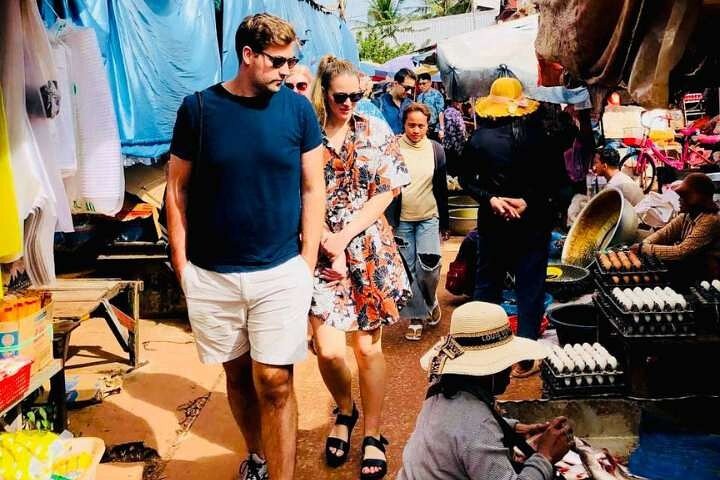
We pass homes where daily life unfolds in the shade. Children playing their games. Families going about their routines. Karaoke drifting from open doorways. The occasional wave or smile from someone watching us pedal past.
Each kilometre brings another little glimpse into the everyday Cambodia that exists beyond the temple gates.
And it is here, away from the grand architecture, that the experience begins to settle into something more personal.
Because a country isn’t just its history.
It’s the people living in the present, raising their children, working to support their families and hoping the next generation will have opportunities they may not have had themselves.
Chen is part of that story.
A local guide, a husband, a father and a man who wants to share his country with the world while building something better for his family.
There’s something rather grounding about that.
We spend our lives chasing experiences, collecting passport stamps and searching for the next extraordinary destination.
Meanwhile, someone else is simply trying to create a good life for the people they love.
Different circumstances. Different challenges.
A surprisingly familiar hope.
THE FINAL BLESSING
Early in the afternoon, we cycle past the entrance to Angkor Wat once more.
And then the heavens open.
A sudden downpour, heavy and sporadic, washes over the landscape.
Chen describes it as a blessing.
And perhaps it is.
The heat breaks. The air changes. The dust settles. Everything feels briefly cleansed, as though the day itself has offered a final moment of reflection.
We pedal on, damp, tired and quietly content.
Thirty-four kilometres behind us.
A kingdom’s worth of history running through our heads.
And a feeling that is difficult to put into words.
We return to where the journey began, grateful for the experience and for Chen’s willingness to share something of his world with us.
But alongside that satisfaction sits another feeling.
Hope, certainly.
And a little anxiety about what lies ahead for Cambodia and its people.
The country has endured so much. Its history is marked by extraordinary achievements, immense suffering and a resilience that is difficult to comprehend from the comfort of a visitor’s seat.
Yet here we are, watching families gather at the temples, children playing in the villages and a young Cambodian father working to build a future for his family.
The future isn’t written in the ancient stones.
It’s being written now, by people like Chen.
By families who keep their traditions alive. By young people seeking opportunity. By communities balancing the benefits of tourism with the need to protect what makes their home special.
And by a country that deserves to be understood for far more than the darkest chapters of its past.
THE VERDICT
This was never just a cycling tour.
It was a journey through Cambodia’s history, its living culture and the everyday life that connects the two.
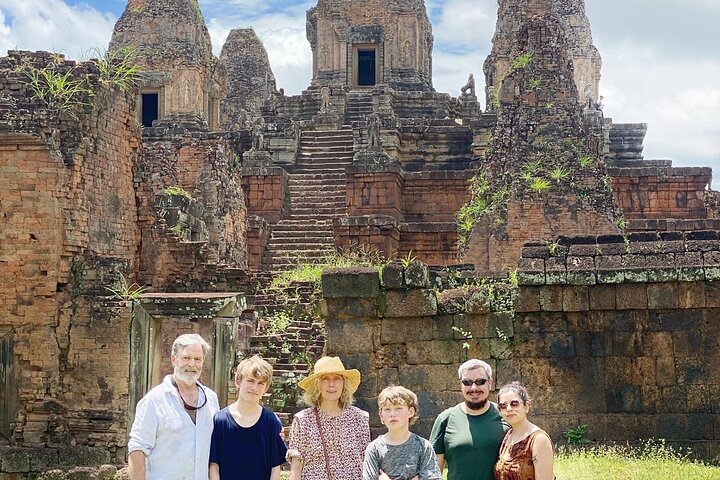
The temples are extraordinary. Angkor Wat, Angkor Thom, Bayon, Ta Prohm and Preah Khan each offer something different, and seeing them woven into a wider journey makes the experience feel richer than simply moving from one landmark to the next.
But Chen is what brings it all together.
His knowledge, his pride in his country and his desire to share its story gave the day a personal connection that no guidebook could replicate.
And the bicycle was the perfect way to experience it.
Quiet paths, village life, rice fields, smiles and moments of stillness between the great monuments.
No need to rush.
No need to conquer a checklist.
Just ride, listen, observe and let Cambodia reveal itself at its own pace.
If you visit Siem Reap, do yourself a favour and experience Angkor beyond the usual transport options. Give yourself the time to explore the surrounding landscape and, more importantly, listen to the people who call it home.
You’ll leave with more than photographs.
You’ll leave with questions, reflections and perhaps a little more understanding of a country whose past is complicated, whose present is changing and whose future deserves every opportunity to flourish.
Thank you, Chen, for the kilometres, the stories, the smiles and the perspective.
We came to see the temples.
We left thinking about the people.
And sometimes, that’s the most meaningful souvenir of all.
Cambodia’s past is carved in stone. Its future is in the hands of its people.
Here’s hoping it’s a bright one.
 Top pick
 Top pick
 Top pick
 Top pick
 Top pick
 Top pick
 Top pick
 Top pick
 Top pick
 Top pick
 Top pick
 Top pick
 Top pick
 Top pick
 Top pick
 Top pick
 Top pick
 Top pick
 Top pick
 Top pick
 Top pick
 Top pick
 Top pick
 Top pick
 Top pick
 Top pick
 Top pick
 Top pick