- 1
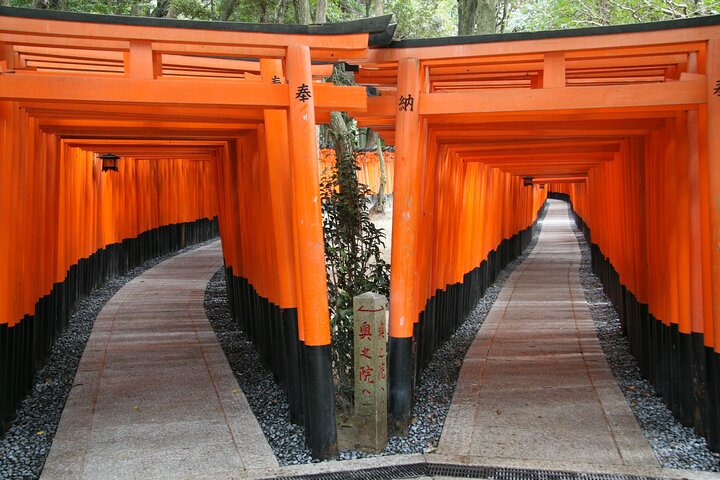
Fushimi Inari-taisha Shrine
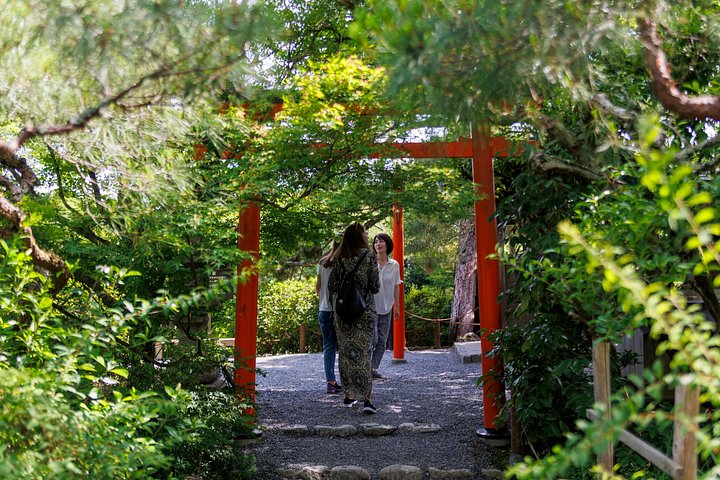
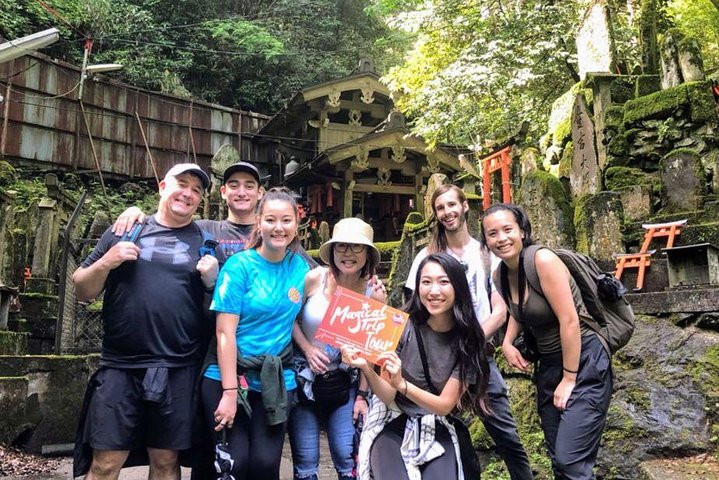
The Fushimi Inari Shrine is celebrated for its iconic tunnels formed by thousands of vibrant red torii gates. This sacred site holds many stories connecting you to Japan's history and culture, with your guide revealing deeper insights.
You'll learn about the shrine's origins, dedicated to the god of grains, and observe the numerous fox statues. The fox, or 'Kitsune,' is considered a messenger of Inari, and you might find yourself wanting these mystical creatures on your side after this enlightening visit.
· 1 min
- 2
Kiyomizu-dera Temple
Explore one of Kyoto's most beloved temples, Kiyomizu-dera, with a comprehensive guided tour.
Gain insights into Japan's history and culture as you discover the magnificent architecture and grounds with your English-speaking guide, who will highlight all the important features.
· 1 min· Admission not included
- 3
Nijo Castle
Discover the unique aspects of Nijo Castle with our guidance.
Admire the opulent design, intended to showcase the prestige of Shogun Tokugawa Ieyasu. Understand the historical, cultural, and artistic significance of this prime example of feudal-era castle architecture, a UNESCO World Heritage Site.
· 1 min· Admission not included
- 4
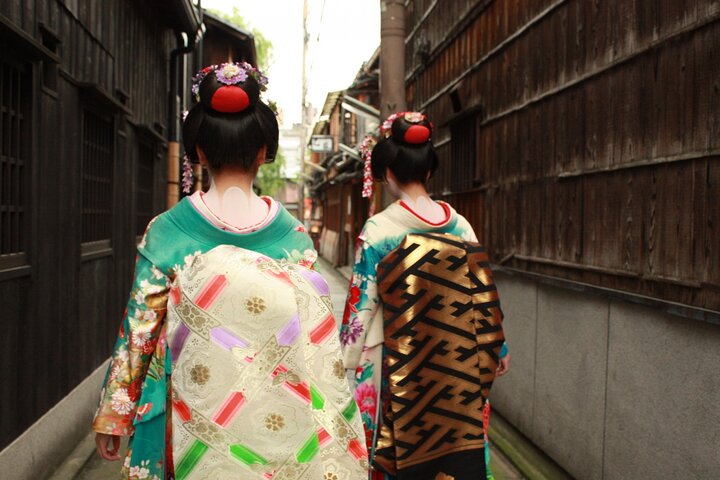
Gion
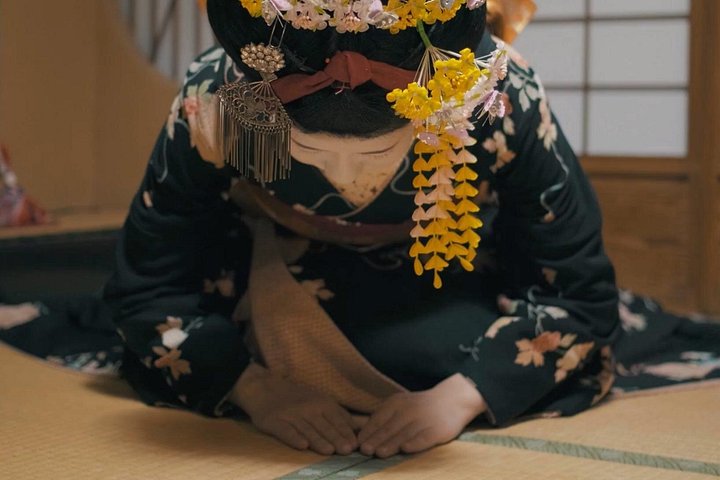
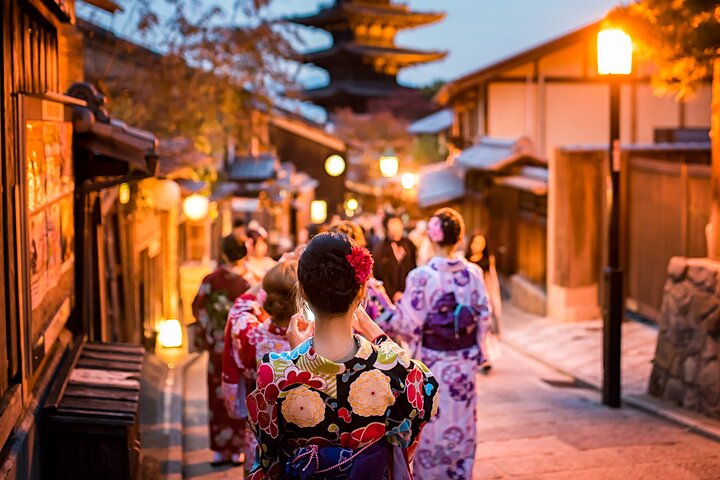
Navigating the narrow streets of Kyoto's Gion, the famous Geisha District, can be challenging for first-time visitors.
A guided tour eliminates the worry of getting lost and helps you discover hidden local gems while learning about Kyoto's ancient past.
· 1 min
- 5
Nishiki Market
Nishiki Market, often called 'Kyoto's Kitchen,' is a bustling five-block long street featuring over a hundred shops and restaurants.
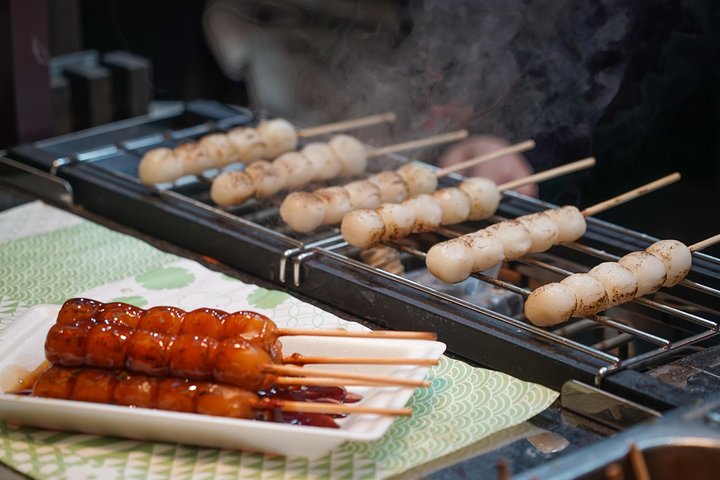
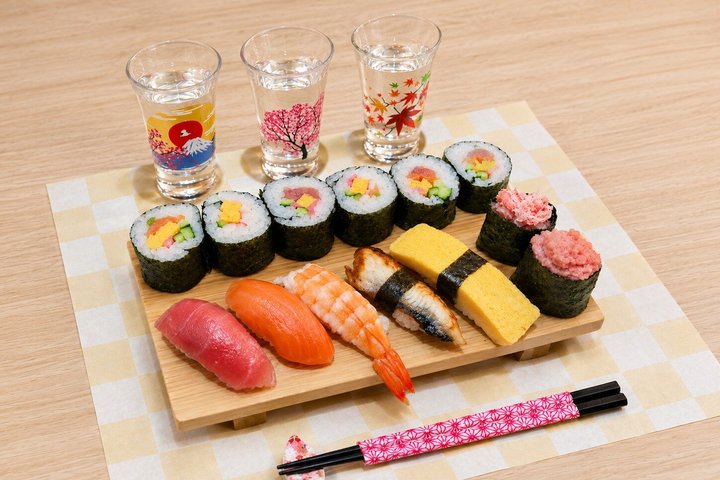
This lively market specializes in everything food-related, from fresh seafood and produce to knives and cookware, offering a perfect spot to find seasonal delicacies and Kyoto specialties like traditional Japanese sweets, pickles, dried seafood, and sushi.
The market boasts a pleasant yet busy atmosphere, inviting exploration of the diverse culinary delights Kyoto is famous for. Shops range from small stalls to larger two-story establishments, most focusing on specific food types, with nearly everything locally sourced.
· 1 min
- 6
Kyoto Imperial Palace
The Kyoto Imperial Palace served as the residence of Japan's Imperial Family until 1868, when the emperor and capital relocated to Tokyo.
It is situated within the expansive Kyoto Imperial Park, a beautiful green space in the city center that also includes the Sento Imperial Palace and other attractions.
· 1 min· Admission not included
- 7
Pontocho
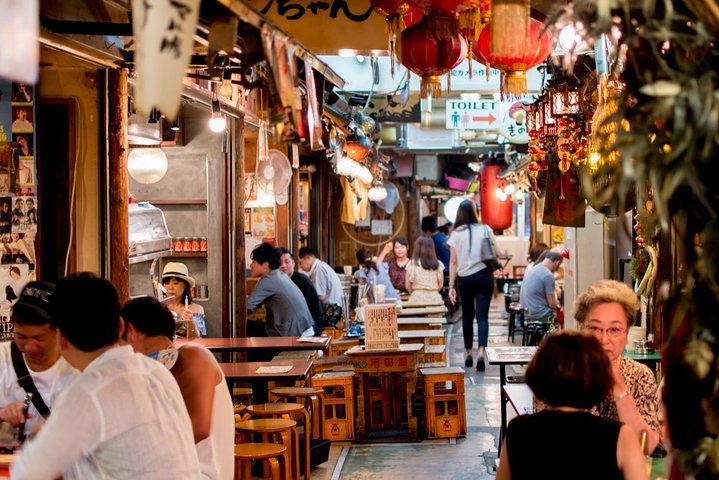
Pontocho is one of Kyoto's most atmospheric dining areas, a narrow alley running parallel to the Kamo River.
This vibrant street is lined with restaurants offering a wide array of dining options, from affordable yakitori to traditional and contemporary Kyoto cuisine, international dishes, and exclusive establishments.
Operating hours and closing days vary among the restaurants, bars, and shops, but most are typically open from around 5:00 PM to 11:00 PM, with some also serving lunch.
· 1 min
- 8
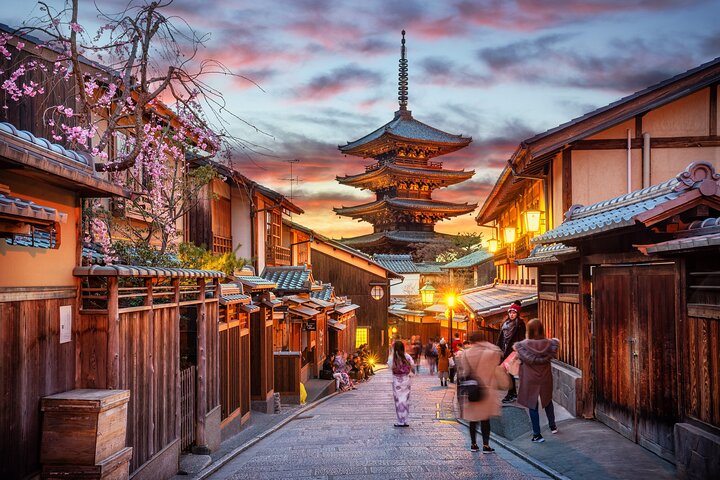
Higashiyama District
The Higashiyama District, nestled along the eastern mountain slopes, is one of Kyoto's most well-preserved historic areas.
It offers a wonderful opportunity to experience traditional old Kyoto, particularly the stretch between Kiyomizu-dera and Yasaka Shrine, where narrow lanes, wooden buildings, and traditional shops evoke the ambiance of the old capital. Recent renovations, including the removal of telephone poles and repaving of streets, have further enhanced the district's historic charm.
· 1 min
- 9
Ginkakuji Temple
Ginkakuji, the Silver Pavilion, is a Zen temple located in Kyoto's eastern mountains (Higashiyama). Shogun Ashikaga Yoshimasa constructed his retirement villa here in 1482, modeled after his grandfather's Golden Pavilion.
Following Yoshimasa's death in 1490, the villa was converted into a Zen temple. As the retreat of an art-loving shogun, Ginkakuji became a hub of contemporary culture, known as Higashiyama Culture, contrasting with his grandfather's Kitayama Culture. Unlike the aristocratic Kitayama Culture, Higashiyama Culture had a nationwide influence, fostering developments in the tea ceremony, flower arrangement, Noh theater, poetry, garden design, and architecture.
· 1 min· Admission not included
- 10
Nanzenji Suirokaku
Nanzenji Temple, situated at the base of Kyoto's forested Higashiyama mountains, is a significant Zen temple in Japan and the head temple of a Rinzai Zen Buddhism school, featuring numerous sub-temples.
The temple's history dates back to the mid-13th century when Emperor Kameyama established his retirement villa on the site before its conversion into a Zen temple. Although its buildings were destroyed during civil wars, the oldest existing structures were built after that period.
· 1 min· Admission not included
- 11
Tofuku-ji Temple
Tofukuji is a large Zen temple in southeastern Kyoto, renowned for its stunning autumn foliage. Founded in 1236 by the Fujiwara clan, its name combines elements of two great Nara temples associated with the clan: Todaiji and Kofukuji.
Historically, Tofukuji has been a principal Zen temple in Kyoto and serves as the head temple for a school within the Rinzai Zen sect. In autumn, visitors flock to Tofukuji to witness its spectacular colors, especially from the Tsutenkyo Bridge spanning a valley of maple trees. The view from the bridge is equally breathtaking, though the 100-meter long walkway can become crowded during peak color season in mid to late November.
· 1 min· Admission not included
- 12
To-ji Temple
To-ji Temple, meaning 'East Temple,' was established in the early Heian Period shortly after Kyoto became the capital in the late 700s. It, along with the now-defunct Saiji ('West Temple'), guarded the southern entrance to the city and served as its guardian temples. To-ji is recognized as a UNESCO World Heritage site.
About thirty years after its founding, Kobo Daishi, the founder of the Shingon sect of Japanese Buddhism, became head priest, transforming To-ji into a major Shingon temple alongside the sect's headquarters on Mount Koya. Many of the large wooden structures present today were added by Kobo Daishi.
· 1 min
- 13
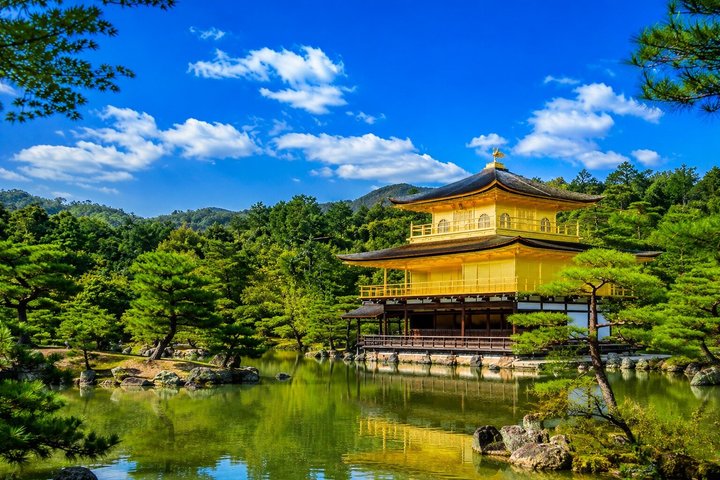
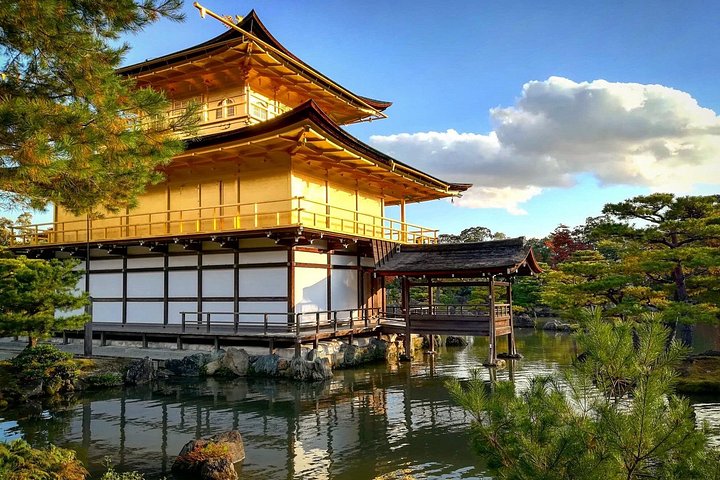
Kinkakuji Temple
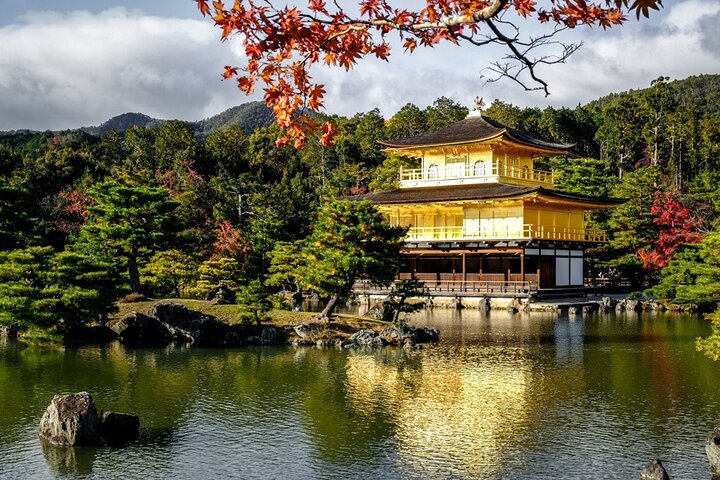
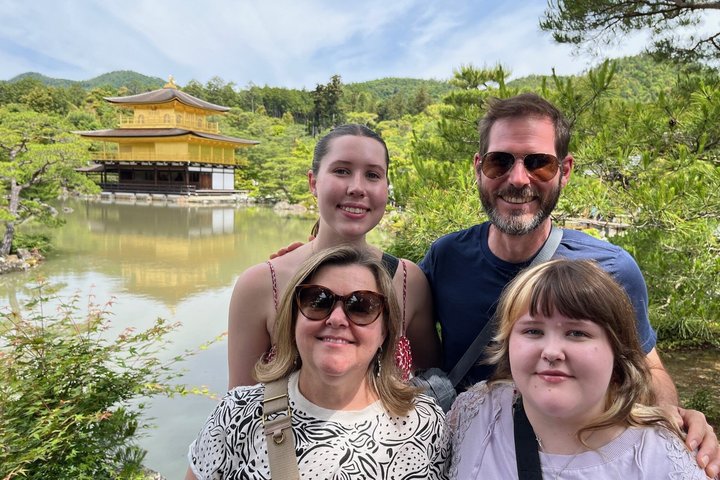
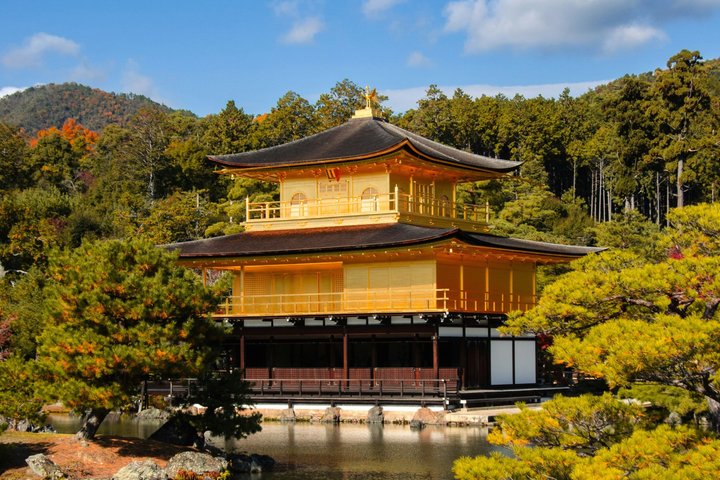
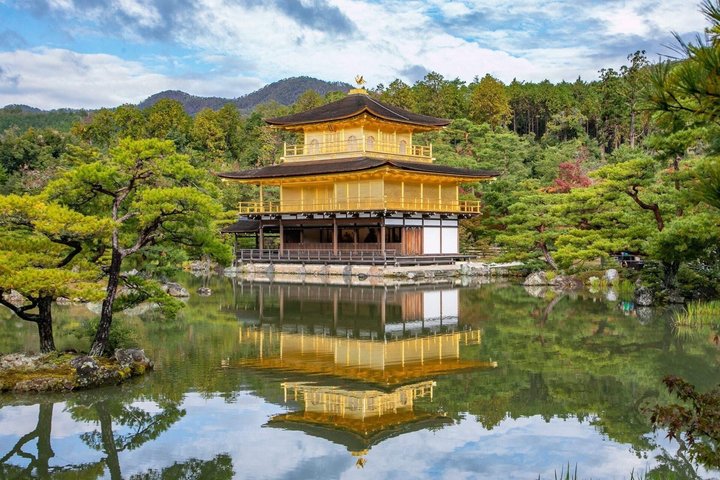
Kinkakuji, the Golden Pavilion, is a Zen temple in northern Kyoto where the top two floors are entirely covered in gold leaf. Originally named Rokuonji, it was the retirement villa of Shogun Ashikaga Yoshimitsu, becoming a Rinzai sect Zen temple after his death in 1408. It inspired the construction of Ginkakuji, the Silver Pavilion, by his grandson.
Kinkakuji is a striking structure overlooking a large pond and is the sole remaining building from Yoshimitsu's retirement complex. It has been destroyed by fire multiple times, including during the Onin War and again in 1950 by a monk. The current building was reconstructed in 1955.
· 1 min· Admission not included
- 14
Ninna-ji Temple
Ninnaji is a Kyoto temple recognized as a World Heritage Site and serves as the head temple for the Omuro School of the Shingon sect. It was founded in 888 by the reigning emperor, and for centuries, a member of the Imperial Family typically served as its head priest, leading to its alternative name, Omuro Imperial Palace.
Due to Kyoto's history of wars and fires, no original buildings from the 9th century survive. The oldest structures, including the main hall (Kondo), Kannon Hall, Niomon gate, Chumon inner gate, and the five-story pagoda, date back to the early Edo Period (around the 1600s).
· 1 min· Admission not included
- 15
Shugakuin Imperial Villa
Shugakuin Imperial Villa, built in the 17th century by Emperor Gomizuno, is now managed by the Imperial Household Agency. It comprises the Upper, Middle, and Lower Villa areas, each featuring traditional imperial-style gardens and buildings.
The villa's name originates from a temple that once stood on the site in the tenth century. Construction of the Imperial Villa occurred between 1655 and 1659, with a palace for Gomizuno's daughter added a decade later. In 1964, the Imperial Household Agency acquired the surrounding farmlands, which are currently leased to local farmers.
· 1 min· Admission not included
- 16
Kibune
Kibune is a small village nestled in a forested valley in Kyoto's northern mountains, developed around Kifune Shrine. Legend states a goddess traveled by boat up the river to this spot, where the shrine was subsequently built.
Dedicated to the god of water and rain, Kifune Shrine is considered a protector of seafarers. Here, you can experience a unique fortune-telling ritual (omikuji) where messages appear when paper slips are dipped in water. Okunomiya, the inner sanctuary, is located about a kilometer further up the valley, featuring a large 'boat stone' said to mark the burial site of the goddess's yellow boat.
· 1 min
- 17
Kurama-dera
Kurama is a rural town in Kyoto's northern mountains, less than an hour from the city center, famous for Kurama-dera temple and its accessible hot springs.
Kurama Onsen offers both outdoor and indoor baths. Day visitors can access all baths for 2500 yen on weekdays and 2700 yen on weekends, or just the outdoor bath (rotemburo) for 1400 yen on weekdays and 1600 yen on weekends. Staying guests have complimentary access.
· 1 min· Admission not included
- 18
Ryoan-ji Temple
Ryoanji Temple is home to Japan's most famous rock garden, attracting numerous visitors daily. Originally a nobleman's villa during the Heian Period, it was converted into a Zen temple in 1450 and belongs to the Myoshinji school of the Rinzai sect.
The origins of Ryoanji's renowned rock garden remain uncertain, with various theories about its designer and construction date. The garden features a rectangular area of gravel enclosed by low earthen walls, with 15 rocks arranged in small groups on mossy patches. A unique design element ensures that at least one rock is always hidden from view, regardless of the observer's vantage point.
· 1 min· Admission not included
- 19
Arashiyama
Arashiyama is a charming district on Kyoto's western outskirts, popular since the Heian Period when aristocrats enjoyed its natural beauty. It is especially favored during cherry blossom and autumn color seasons.
The Togetsukyo Bridge is a central landmark. Nearby attractions include Tenryuji Temple, the famous bamboo groves, and river boating opportunities.
· 1 min· Admission not included
- 20
Katsura Imperial Villa
Katsura Imperial Villa is a masterpiece of Japanese architecture and garden design, completed in 1645 as the residence for the Katsura family, members of the Imperial Family.
Visits require joining a guided tour that follows a circular path around the central pond. Palace buildings are viewable only from the exterior, and photography is restricted to designated areas. English tours are available.
· 1 min· Admission not included
- 21
Daikaku-ji Temple
Daikakuji, located in Kyoto's northern Sagano district, was initially Emperor Saga's detached palace in the early 800s. It was converted into a temple about thirty years after the emperor's death and is now a leading Shingon Buddhism temple.
The temple played a role in significant historical events, including hosting peace talks that reunited the Northern and Southern Imperial Courts. It is also featured in 'The Tale of Genji' and remains a place to experience the ancient court atmosphere described in the novel, often serving as a filming location for historical dramas.
· 1 min· Admission not included
- 22
Tenryu-ji Temple
Tenryuji is the most significant temple in Kyoto's Arashiyama district, ranked first among the city's five great Zen temples and recognized as a World Heritage site. It is the head temple of its own school within the Rinzai Zen sect.
Built in 1339 by Shogun Ashikaga Takauji, the temple was dedicated to Emperor Go-Daigo, who had recently passed away. Takauji, once allied with the emperor, later turned against him in a power struggle. By constructing the temple, Takauji aimed to appease the late emperor's spirit.
· 1 min· Admission not included
- 23
Yoshimine-dera
Yoshiminedera is a Tendai sect temple in Kyoto's western mountains, offering panoramic views of the city, similar to Kiyomizudera. Its spacious grounds feature numerous buildings scattered along the mountainside.
Founded in 1029 by priest Gesan as a personal retreat, the temple was destroyed in the Onin War (1467) and rebuilt in 1621. Its primary objects of worship include a Kannon statue carved by Gesan and another gifted by Emperor Gosuzaku in 1042.
· 1 min· Admission not included
- 24
Togetsukyo Bridge
The Togetsukyo Bridge, meaning 'Moon Crossing Bridge,' is Arashiyama's most recognizable landmark. Originally built during the Heian Period (794-1185), it was last reconstructed in the 1930s.
The bridge offers a picturesque view against the backdrop of forested mountains. A riverside park with numerous cherry trees is situated adjacent to the bridge.
· Non-stop passage
- 25
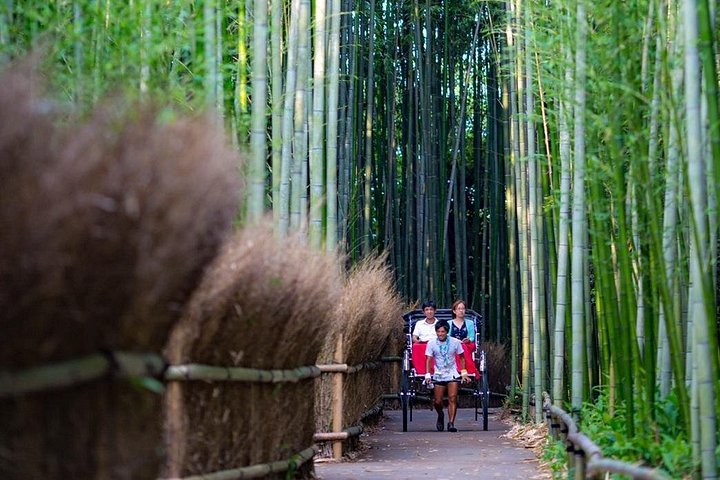
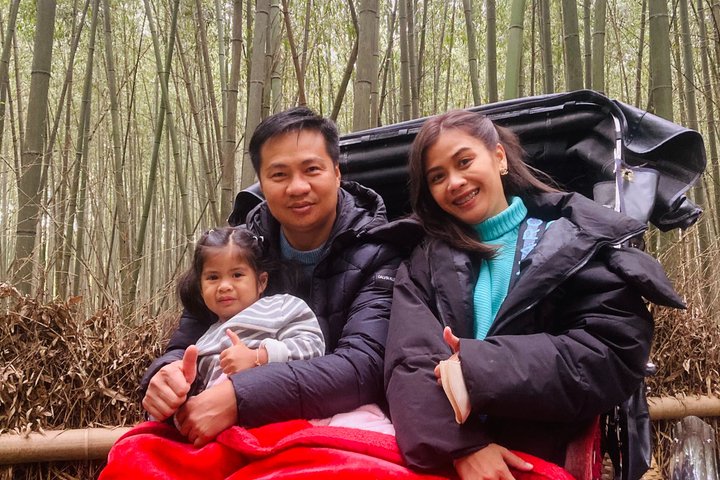
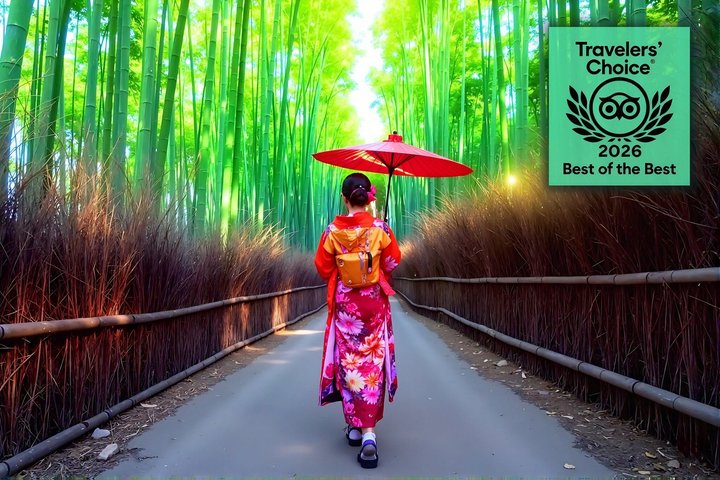
Bamboo Forest Street
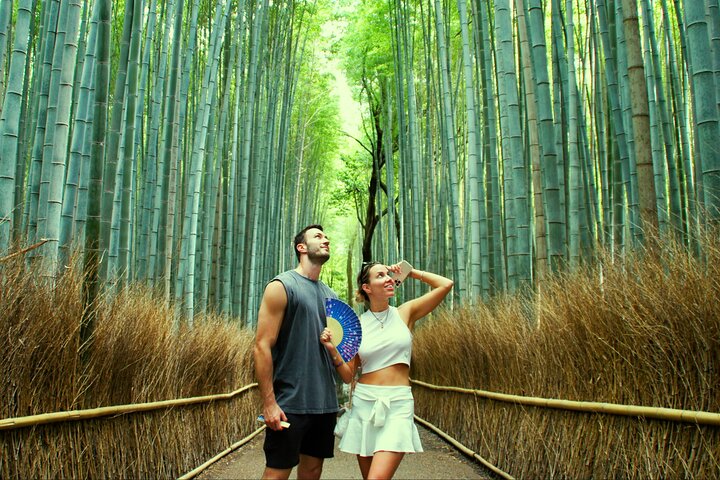
Walking paths wind through the bamboo groves, offering a pleasant stroll or bike ride. The towering bamboo stalks sway gently in the breeze, creating a serene atmosphere.
For centuries, local workshops have utilized bamboo to craft various products, including baskets, cups, boxes, and mats.
· Non-stop passage
- 26
Okochi Sanso Garden
This former villa of actor Okochi Denjiro (1896-1962) is located behind Arashiyama's bamboo groves. It features several distinct gardens and buildings, including living quarters, tea houses, and gates, which can be viewed from the outside.
Admission includes matcha green tea and a snack.
· 1 min· Admission not included
- 27
Jojakkoji Temple
Founded in 1596, this mountainside temple exudes a quiet and understated charm with its small, attractive buildings and gates.
Maple trees and moss line the paths and stairs that traverse the temple grounds. Various vantage points offer scenic views over Kyoto.
· 1 min· Admission not included
- 28
Nisonin
Nisonin Temple, like Jojakkoji, is a hillside temple featuring slightly larger and more imposing structures. The temple grounds maintain a generally understated atmosphere, partly due to the overhanging trees along the approach.
Founded in the mid-9th century, Nisonin belongs to the Tendai sect. Views of the city are available from the upper sections of the grounds.
· 1 min· Admission not included
- 29
Gio-ji Temple
Gio-ji Temple is even more secluded within the forest than Jojakkoji and Nisonin. It is renowned for its moss garden, interspersed with tall maple trees.
The temple's entrance gate and small main hall feature thatched roofs, with the latter having an attractive round window overlooking the gardens.
· 1 min· Admission not included
- 30
Adashino Nembetsu-ji Temple
Located at the end of the Saga-Toriimoto Preserved Street, Adashino Nenbutsuji was established in the early 9th century by the monk Kobo Daishi, who placed stone statues here for the souls of the departed.
Today, the temple grounds are adorned with hundreds of these stone statues. A short path at the back of the temple leads through a bamboo forest.
· 1 min· Admission not included
- 31
Otagi Nenbutsu-ji Temple
A ten-minute walk north of the similarly named Adashino Nenbutsuji, Otagi Nenbutsuji Temple is distinguished by its 1200 stone statues of 'rakan' (devoted Buddhist followers), each with a unique expression. Created in the 1980s and early 1990s, these numerous statues are spread across the temple grounds, which extend up a forested mountainside.
Each statue possesses a distinct facial expression, adding to the temple's unique charm.
· 1 min· Admission not included
- 32
Daitoku-ji Temple
Daitokuji is a large, walled temple complex in northern Kyoto, serving as the head temple of the Daitokuji school of the Rinzai sect of Japanese Zen Buddhism. The complex includes nearly two dozen sub-temples and is an excellent place to experience Zen culture, architecture, and view various Zen gardens.
While the main buildings are typically closed to the public, four sub-temples are accessible: Daisenin, Ryogenin, Zuihoin, and Kotoin (currently closed).
· 1 min· Admission not included
- 33
Myoshinji Temple
Myoshinji is an extensive temple complex in northwestern Kyoto, comprising approximately 50 sub-temples in addition to its main structures. Although some temple halls are open for entry, most sub-temples remain closed to visitors.
Visitors are welcome to explore the walking paths throughout the complex. In many respects, the temple complex bears a resemblance to Daitokuji Temple.
· 1 min· Admission not included
- 34
Eikando Zenrinji Temple
Eikando, officially Zenrinji Temple, belongs to the Jodo sect of Japanese Buddhism. Located north of Nanzenji, it is highly acclaimed for its autumn colors and the evening illuminations held during the fall season.
The temple boasts a long history, with diverse buildings and a pond garden available for visitors to explore.
· 1 min· Admission not included
- 35
Sanjusangendo Temple
Sanjusangendo, commonly known as Rengeo-in, is a temple in eastern Kyoto famous for its 1001 statues of Kannon, the goddess of mercy. The temple was founded in 1164 and rebuilt a century later after the original structure was destroyed by fire.
· 1 min· Admission not included
- 36
Kennin-ji Temple
Kennin-ji Temple is situated very close to the lively Hanamikoji and Shijo streets. Its expansive and pleasant grounds offer an oasis of tranquility, featuring two karesansui (dry landscape gardens).
It is believed to be the oldest Zen temple in Kyoto.
· 1 min· Admission not included
- 37
Byodoin Temple
Byodoin Temple is renowned for its Phoenix Hall, a National Treasure of Japan and a UNESCO World Heritage Site.
Please note that additional travel time is expected as the temple is located in Uji city, within Kyoto prefecture.
· 1 min· Admission not included
 Top pick
 Top pick
 Top pick
 Top pick
 Top pick
 -5%
 Top pick
 -10%
 Top pick
 Top pick
 Deal
 Top pick
 -5%
 Top pick
 -20%
 -6%
 Top pick
 Top pick
 Top pick
 Top pick
 Top pick
 Top pick
 Free cancellation


 Free cancellation
 Top pick
 Top pick
 Top pick

 Top pick
 Top pick
 Top pick
 Top pick
 Top pick